
⏱ 2 min read
The Short Version
Transforming loose leaves into iconic tea cakes requires more than just pressure; it demands a precise dance of steam, manual rolling, and granite-weighted cooling. This meticulous compression process locks in density and structure, ensuring Yunnan’s finest harvests can breathe and evolve through years of aging.
In This Article
A feature wall constructed entirely from 2kg tea bricks greets visitors at the entrance of this refined tea processing plant in Yunnan. While these lower-grade leaves serve primarily for decor—functioning alongside compressed tea room dividers—they offer a glimpse into the scale of production required to transform loose leaf into the iconic tea cakes familiar to collectors. Moving past the aesthetic displays, the facility reveals the precise, multi-stage mechanics used to create dense, uniform pucks of tea.
A heavy mechanical press squeezes down hard to lock in that dense, uniform cake shape.
The Mechanics of Compression
The transformation begins by weighing exact portions of dry, loose leaves before they are loaded into metal canisters. These canisters receive a brief blast of hot steam, a critical step designed to make brittle leaves pliable without getting them soggy. Once softened, the tea is transferred into cloth bags where craftsmen use manual twisting and rolling motions to coax the mass into a rough circular form. This hand-forming stage provides the foundation for the mechanical work that follows.
The bagged tea enters a heavy machine for a secondary press, which applies intense pressure to lock in a dense shape. A heavy mechanical press squeezes down hard to lock in that dense, uniform cake shape. To ensure stability, the pressed cakes are placed under heavy granite stones. This weight keeps the structure flat while the tea naturally cools, allowing the density to set through gravity and temperature rather than just mechanical force.
Dehydration and Protection
Once cooled, the cakes are removed from their cloth bags and organized on drying racks. These racks are moved into a controlled environment where low heat slowly dehydrates the cakes. This slow process is vital to lock in the final structure and prevent moisture issues during long-term storage or transit. It is a delicate balance; too much heat could damage the leaf, but insufficient dryness invites spoilage.
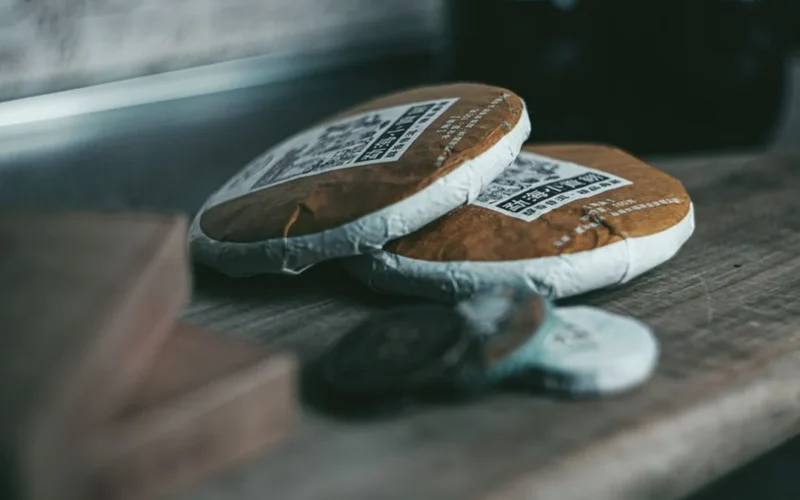
The final touch is the wrapping stage, where each dried cake is encased in breathable cotton paper. This specific material choice ensures the tea can breathe during its journey, whether it is destined for immediate shipment or intended for years of meticulous aging. The transition from loose harvest to a protected, compressed cake is what ultimately allows Yunnan’s finest teas to evolve over time.
Do you prefer drinking loose leaf tea for its immediate brightness, or do you enjoy the evolving complexity of aged tea cakes?
Questions & Answers
How are loose tea leaves transformed into compressed cakes?
Loose tea leaves are transformed into compressed cakes through a multi-stage process involving steaming, hand-forming, and mechanical pressing. First, dry leaves are placed in metal canisters and blasted with hot steam to make them pliable. Craftsmen then manually twist and roll the tea into rough circular forms inside cloth bags. Finally, the tea undergoes secondary pressing in a heavy machine and is weighted down with granite stones to ensure a dense, uniform shape.
Why is steaming necessary during the tea compression process?
Steaming is necessary because it makes brittle tea leaves pliable enough to be shaped without breaking them. By applying a brief blast of hot steam to the leaves inside metal canisters, producers can soften the texture so the tea can be molded. This step is carefully controlled to ensure the leaves become flexible enough for manual rolling and mechanical pressing without becoming overly soggy or damaged by excess moisture.
What role does dehydration play in tea cake production?
Dehydration is used to lock in the final structure of the tea cake and prevent moisture-related issues during storage. Once the cakes have cooled, they are placed on drying racks in a controlled environment where low heat is applied. This slow dehydration process is vital for stability, as it protects the tea from spoilage while ensuring the heat levels do not become high enough to damage the delicate leaves.
How is tea cake protected for long-term aging or shipping?
Tea cakes are protected by being encased in breathable cotton paper during the final wrapping stage. This specific material allows the tea to breathe, which is essential whether the product is intended for immediate shipment or for years of meticulous aging. Using breathable paper ensures that the tea can evolve naturally over time while remaining shielded from external elements during transit and long-term storage.
Originally reported by Reddit Tea.