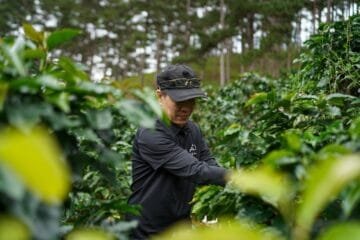
The coffee world thrives on critique—until it doesn’t. In specialty coffee, feedback is the lifeblood of quality, yet its flow is anything but equal. Producers, often working in remote regions with thin margins, crave input to refine their craft. Roasters, meanwhile, wield taste authority like a badge of honor, sometimes dismissing feedback as a threat to their expertise. This asymmetry isn’t just a cultural quirk—it’s a systemic gap that shapes who gets heard and who gets left in the dark.
Producers are the unsung heroes of this equation. They need precise, actionable feedback to improve moisture levels, fermentation techniques, or drying methods. Yet their primary audience—buyers—rarely offers more than a rejection notice. “Producers are launching a product,” says Anny Ruth, a former coffee producer. “They need to know how their decisions at origin affect the final cup.” But roasters, focused on consistency and differentiation, often treat feedback as a tool for problem-solving, not collaboration. This creates a feedback loop where producers receive little more than a cold contract, while roasters refine their processes with data-driven precision.
Competitions like the Global Coffee Awards (GCA) are changing that. By centering the final cup, these events create a shared language where producers and roasters can exchange insights. “Structured feedback helps origin roasters understand how their practices impact the cup,” says Maria Emilia Rueda, a key figure in the Producer Roaster Forum. “It’s not just about scoring—it’s about performance.” For example, a coffee labeled “average” in traditional cupping might still outperform others in real-world markets, yet its value is overlooked. Competitions that categorize coffees by function—everyday, showcase, or volume—could reward producers for what their beans actually do, not just how they score.
The solution isn’t just about sharing more feedback—it’s about making it meaningful. Digital tools now let roasters and producers share cupping sheets, roast data, and brewing diagnostics in real time. Yet few systems prioritize producers’ needs. “We grade coffee on a single sensory scale,” says Anny Ruth. “That’s like judging cars only by color.” To bridge this gap, the industry must formalize feedback as infrastructure, not an afterthought. It’s time to turn critique into a two-way street, where everyone’s insights matter.
How would that reshape the way we brew, buy, and brew.
What if the coffee world embraced feedback as a shared tool, not a weapon? How would that reshape the way we brew, buy, and brew?
Questions & Answers
How do I know if someone wants feedback on their coffee?
Ask directly. If they say “no,” respect their preference. Most people appreciate honesty but value their choice.
What if I accidentally give feedback they didn’t want?
Apologize and clarify. Respect their boundaries. It’s better to ask first than risk offending.
Information sourced from industry reports and news outlets.