⏱ 1 min read
The Short Version
Bordeaux land values are cratering as annual shipments plummet below the historic three-million-hectolitre mark for the first time. With Médoc prices slashed by over 80%, the region is aggressively uprooting 30,000 hectares to survive a brutal market correction.
Even the most storied wine regions are susceptible to the gravity of a shifting market. For the first time in modern history, annual shipments from Bordeaux have dipped below the symbolic three million hectolitre threshold. This isn’t just a seasonal dip; it is a profound contraction that has sent shockwaves through the region’s real estate economy.
Annual shipments from Bordeaux producers fell to 2.98 million hectolitres, down 12% year-on-year.
A massive correction in vineyard pricing
The decline in demand is manifesting as a sharp devaluation for landowners across almost every major appellation. While prestigious names like Pauillac and Margaux remain relatively resilient, they haven’t escaped the slide, seeing price drops between 22% and 27%. However, the true carnage is visible in the secondary markets. Values in Médoc have plummeted by over 80%, while Lalande-de-Pomerol and Fronsac have seen their land prices nearly halved since 2018. Annual shipments from Bordeaux producers fell to 2.98 million hectolitres, down 12% year-on-year. The numbers reveal a landscape where Bordeaux Rouge land has lost more than 60% of its value, signaling a fundamental loss of confidence in traditional volume production.
Restructuring the terroir
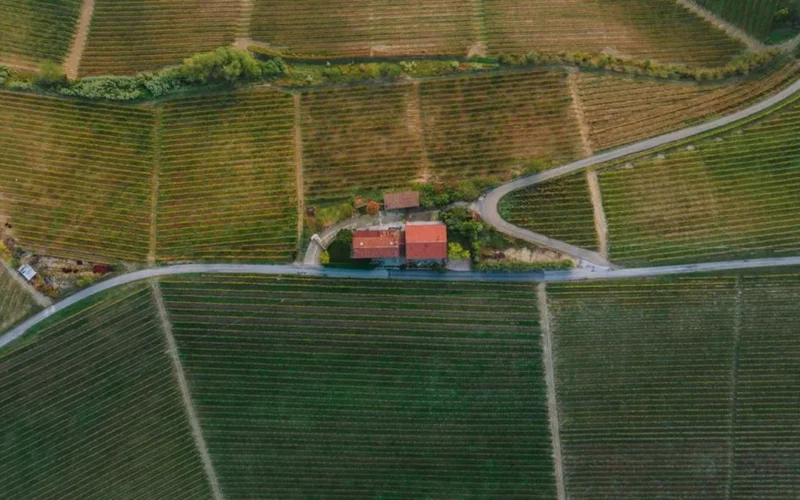
To combat this surplus, the region is undergoing one of its most significant vineyard restructuring programs ever recorded. Between 2023 and 2026, almost 30,000 hectares of vines will have been uprooted. Around two-thirds of that area was removed through government-backed compensation schemes, with growers receiving either €6,000 or €4,000 per hectare depending on the programme. The remaining vineyards were removed without any financial support. This massive reduction is a direct effort to rebalance supply with declining demand. As the industry recalibrates, the focus is shifting from how much can be grown to what is actually worth producing.
Do you think Bordeaux’s move toward smaller, higher-quality yields will eventually stabilize the market?
Questions & Answers
Why are Bordeaux land values experiencing a significant decline?
Bordeaux land values are falling due to a profound contraction in wine shipments and a subsequent drop in market demand. Annual shipments from the region have recently dipped below the three million hectolitre threshold, hitting 2.98 million hectolitres for a year-on-year decrease of 12%. This decline has triggered a massive correction in vineyard pricing across various appellations. While prestigious areas like Margaux remain somewhat resilient, secondary markets like Médoc have seen land values plummet by more than 80% as confidence in volume production wanes.
How much has the value of Bordeaux Rouge land decreased?
Bordeaux Rouge land has lost more than 60% of its total value during this market downturn. This significant devaluation affects various parts of the region to different degrees depending on the specific appellation. For instance, while prestigious names like Pauillac have seen price drops between 22% and 27%, other areas face much harsher realities. In Lalande-de-Pomerol and Fronsac, land prices have nearly halved since 2018, reflecting a fundamental shift in the economic landscape for traditional wine producers throughout the region.
What is being done to address the surplus of wine in Bordeaux?
The Bordeaux region is implementing a massive vineyard restructuring program to rebalance supply with declining demand. Between 2023 and 2026, approximately 30,000 hectares of vines are scheduled to be uprooted to correct the market surplus. To facilitate this transition, government-backed compensation schemes have been utilized for about two-thirds of the removed area. Under these programs, growers receive financial support ranging from €4,000 to €6,000 per hectare, helping the industry shift its focus toward more sustainable and high-quality production levels.
How much compensation do growers receive for uprooting vineyards?
Growers receiving government assistance for vineyard removal can get between €4,000 and €6,000 per hectare. These payments are provided through specific compensation schemes designed to help manage the massive reduction in vine acreage currently underway in Bordeaux. This financial support covers approximately two-thirds of the nearly 30,000 hectares slated for uprooting between 2023 and 2026. However, it is important to note that the remaining portion of vineyards being removed is done so without any form of financial support from these programs.
Originally reported by The Drinks Business.