⏱ 1 min read
The Short Version
A 135-year-old Madeira defies time, alive with sharp acidity and complex flavors, proving that some wines evolve rather than fade. This oxidative, heat-aged wine offers a taste of history, transforming with time rather than losing its essence.
In This Article
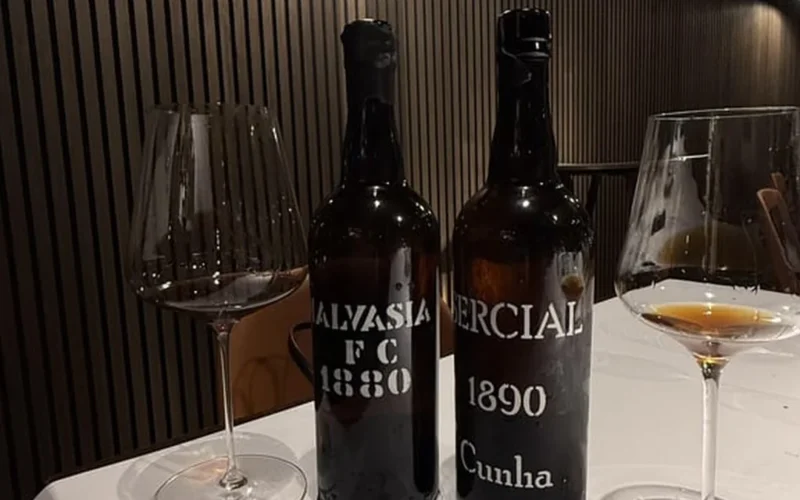
A 135-year-old Madeira defies time. These bottles, older than the car, the airplane, and pretty much everyone’s great-grandparents, are not relics. They’re alive. Oxidative aging, heat, time. A 19th-century Sercial still cuts with that bone-dry acidity and vinagrinho. The Malvasia goes the other way, caramel, dried figs, old wood, something almost like aged balsamic but with a finish that won’t quit. Impressive.
Oxidative aging, heat, time. A 19th-century Sercial still cuts with that bone-dry acidity and vinagrinho.
The Alchemy of Madeira
Madeira’s magic lies in its transformation. Unlike wine that ages in a bottle, Madeira is cooked—subjected to heat and oxidation during aging. This process, called estufagem, turns fragile grape juice into something resilient. A 1890 Sercial, for instance, retains its sharp acidity, a trait that would vanish in most wines. It’s not just survival; it’s evolution. The result is a wine that changes with time, not one that fades.
A Taste of Legacy
Drinking a 13,5-year-old Madeira is less about savoring wine and more about confronting history. The Malvasia FC 1880, with its figgy sweetness and woodsy undertones, feels like a whisper from the past. It’s not a dessert wine in the modern sense—it’s a document. The Sercial, meanwhile, is a testament to restraint. Its acidity is alive, a reminder that some wines thrive not by aging, but by enduring.
Oxidative aging, heat, time. A 19th-century Sercial still cuts with that bone-dry acidity and vinagrinho.
What does it mean for a wine to outlive its era?
Questions & Answers
How does Madeira differ from regular wine in the aging process?
Madeira undergoes *estufagem*, a process of heat and oxidation, transforming it into a resilient wine. Unlike regular wine, which ages in a bottle, Madeira is "cooked," developing unique traits like sharp acidity in Sercial. This method preserves and evolves the wine over time, rather than fading.
What makes a 135-year-old Madeira still drinkable?
A 135-year-old Madeira remains drinkable due to oxidative aging and heat treatment, which preserve its structure. The 19th-century Sercial retains its bone-dry acidity and vinagrinho, showing that Madeira evolves rather than decays. This process allows it to age gracefully, maintaining complexity and character.
Why is oxidative aging important for Madeira?
Oxidative aging is crucial for Madeira as it transforms fragile grape juice into a resilient wine. This process, combined with heat, creates unique flavors like caramel and dried figs in Malvasia. It ensures the wine not only survives but also evolves, offering a distinct taste profile that deepens over time.
How does drinking old Madeira connect to history?
Drinking old Madeira connects to history by offering a taste of the past. The Malvasia FC 1880, for example, feels like a whisper from the 19th century, with figgy sweetness and woodsy undertones. It's not just a wine but a document of its era, providing a sensory link to historical moments through its enduring character.
Originally reported by Reddit Wine.