⏱ 2 min read
The Short Version
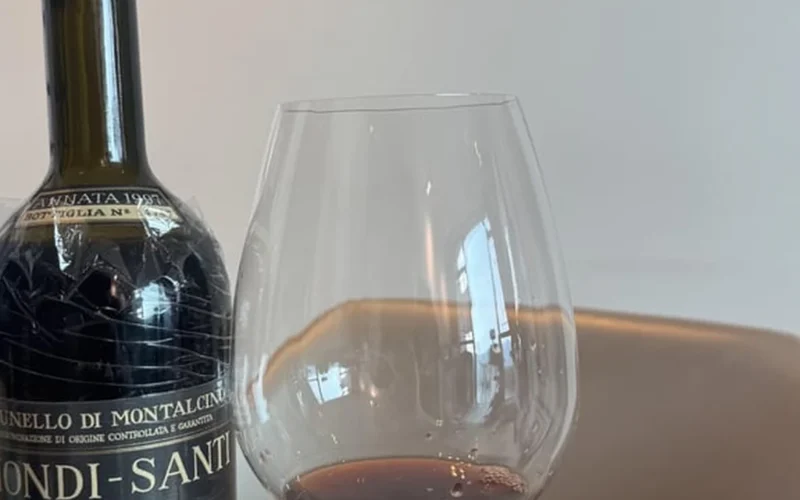
A 1997 Biondi-Santi Brunello, aged for three years in Slavonian oak and refined in bottle, reveals balsamic and oregano notes, showcasing the legacy of Sangiovese Grosso and the art of time.
In This Article
The 1997 Tenuta Greppo Brunello di Montalcino is a testament to the intersection of terroir and human intervention. Ferrucio Biondi-Santi’s isolation of Sangiovese Grosso in the 1970s redefined Montalcino’s identity, steering it away from its moscadello roots toward a legacy of structured, age-worthy wines. This bottle, aged for three years in Slavonian oak and then further refined in bottle, captures the essence of that transformation. Its garnet hue leans toward tawny, a visual signal that time has left its mark, yet the wine still carries layers of depth.
The 1997 vintage was an ideal year, blending cold winters and dry summers to craft a wine that’s earthy, leathery, and mushroomy, with high acidity and a drying tannic finish.
Vintage Alchemy
The 1997 vintage was a masterclass in balance. A cold, rainy winter gave way to a temperate spring, then a dry, warm summer with strategic rainfall. September’s heat sealed the grapes’ ripeness, creating a foundation for complexity. The result? A wine that’s earthy, leathery, and mushroomy, with high acidity and a drying tannic finish. These traits aren’t flaws—they’re markers of a wine that’s aged gracefully, even if it’s no longer at its peak.
The BBS11 Legacy
This Brunello’s identity hinges on the BBS11 clone, a proprietary Sangiovese Grosso selected by Biondi-Santi himself. Grown on vines aged 10–25 years, the grapes reflect both terroir and care. The 1997 bottling’s long refinement in bottle has allowed tertiary notes—balsamic, oregano—to dominate, while faint red cherry hints linger like a memory. It’s a wine that rewards patience, even if its peak has passed.
The 1997 vintage was an ideal year, blending cold winters and dry summers to craft a wine that’s earthy, leathery, and mushroomy, with high acidity and a drying tannic finish.
The 1997 vintage also reflects a broader shift in Italian winemaking philosophy, as traditional methods gave way to a more interventionist approach. Winemakers began to prioritize structure and aging potential, moving away from the fruit-forward styles of the past. This evolution is evident in the Brunello’s character—its tannic grip and layered complexity speak to a new era of precision and ambition.
What does a wine like this say about the art of aging? How do you balance the desire to savor a moment with the reality that time reshapes even the best intentions?
Questions & Answers
How did the 1997 vintage influence Brunello di Montalcino?
The 1997 vintage was a masterclass in balance, with a cold, rainy winter followed by a dry, warm summer and strategic rainfall. This created a foundation for complexity, resulting in a wine that's earthy, leathery, and mushroomy with high acidity and a drying tannic finish.
What role did the BBS11 clone play in the 1997 Brunello?
The BBS11 clone, a proprietary Sangiovese Grosso selected by Ferrucio Biondi-Santi, was central to the 1997 Brunello. Grown on vines aged 10–25 years, it reflected both terroir and care, allowing tertiary notes like balsamic and oregano to dominate.
Why is the 1997 Brunello considered a testament to time?
The 1997 Brunello is a testament to time due to its aging process—three years in Slavonian oak and further refinement in bottle. Its garnet hue leaning toward tawny and layered depth signal that time has left its mark, even if it’s no longer at its peak.
How did the 1997 Brunello reflect a shift in Italian winemaking?
The 1997 Brunello reflected a broader shift toward structure and aging potential, moving away from fruit-forward styles. This evolution is evident in its earthy, leathery character and high acidity, showcasing a more interventionist approach in winemaking.
Originally reported by Reddit Wine.