⏱ 1 min read
The Short Version
Marlborough’s Pinot Noir, once overshadowed by Sauvignon Blanc, is now a celebrated symbol of the region’s terroir-driven elegance and complexity.
In This Article
Marlborough’s Pinot Noir is no longer an afterthought—it’s a defining force in the region’s wine narrative. Once eclipsed by Sauvignon Blanc’s global appeal, Pinot has carved out a distinct identity, showcasing the region’s capacity for complexity and elegance. This transformation reflects a deeper shift in New Zealand’s wine industry, where precision and terroir-driven storytelling are now as celebrated as power and fruit-forward intensity.
Marlborough’s Pinot Noir is redefining the global landscape, proving that terroir-driven elegance can stand alongside tradition and power.
Terroir as a Catalyst
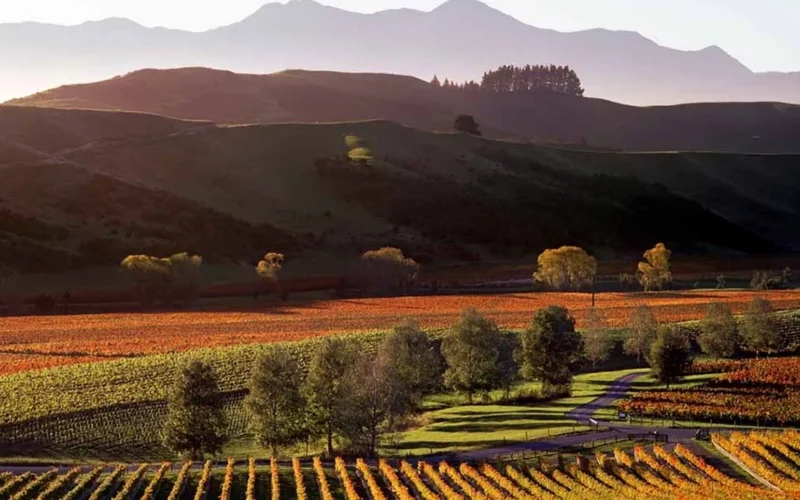
Marlborough’s Pinot Noir thrives on a nuanced interplay of warmth and coolness, shaped by its unique geography. The Southern Valleys’ clay soils yield rich, fleshy wines with spicy depth, while the Awatere’s river gravels produce vibrant, savory-herbal styles. These microclimates, paired with maritime acidity and extended ripening periods, create wines that are both intense and refined. The region’s terroir, comparable to Burgundy’s in Heat Degree Days and rainfall, has allowed Pinot to flourish. Yet it’s the diversity of soils—like the silt-loess gravels of Deep Down Wines’ Brancott Valley—that truly sets Marlborough apart. Here, 35+ year-old vines and the 10/5 clone produce Pinot with lifted aromatics and natural preservation, eliminating the need for sulfur.
From Afterthought to Artisanal
For decades, Pinot was a secondary concern in Marlborough, often used for sparkling wine. But as growers turned to the hills of the Southern Valleys, they unlocked the varietal’s potential. Elevation, aspect, and clay-rich soils proved ideal for quality Pinot, sparking a renaissance. Today, Marlborough’s Pinots display classic cool-climate vibrancy—bright red fruits, perfumed violets, and stony minerality—without being heavy. This evolution is not just local; Marlborough’s Pinot is gaining traction in premium markets, influencing global consumer preferences with its balance of structure and subtlety. Marlborough’s Pinot Noir is redefining the global landscape, proving that terroir-driven elegance can stand alongside tradition and power. What does it mean for a region to redefine itself through a single varietal? How do Marlborough’s Pinots compare to their Burgundian counterparts in terms of structure and storytelling?
Questions & Answers
How has Marlborough’s Pinot Noir changed the region’s wine identity?
Marlborough’s Pinot Noir has shifted the region’s wine identity from a Sauvignon Blanc-dominated scene to one that celebrates complexity and elegance. This transformation highlights the region’s terroir-driven potential, with distinct styles emerging from different soils and microclimates.
What factors contribute to the unique character of Marlborough’s Pinot Noir?
Marlborough’s Pinot Noir benefits from a blend of warmth and coolness, shaped by its geography and soils. Southern Valleys’ clay soils produce rich, spicy wines, while Awatere’s river gravels yield vibrant, savory-herbal styles. These microclimates, along with maritime acidity, create wines that are both intense and refined.
Why is Marlborough’s Pinot Noir gaining global recognition?
Marlborough’s Pinot Noir is gaining global recognition due to its balance of structure and subtlety, offering classic cool-climate vibrancy with bright red fruits, perfumed violets, and stony minerality. This evolution reflects a shift in consumer preferences toward terroir-driven elegance and refined complexity.
How has the role of Pinot Noir evolved in Marlborough’s wine industry?
Pinot Noir has evolved from an afterthought to a central focus in Marlborough’s wine industry. Once used mainly for sparkling wine, it now thrives in the Southern Valleys, where elevation and clay soils unlock its potential, leading to a renaissance of artisanal, high-quality Pinot production.
Originally reported by Wine Folly.