⏱ 1 min read
The Short Version
A young Autumn Pu’er surprises with its sharp, tangy start and unexpected smoothness, defying expectations of astringency and offering a unique texture and flavor evolution.
In This Article
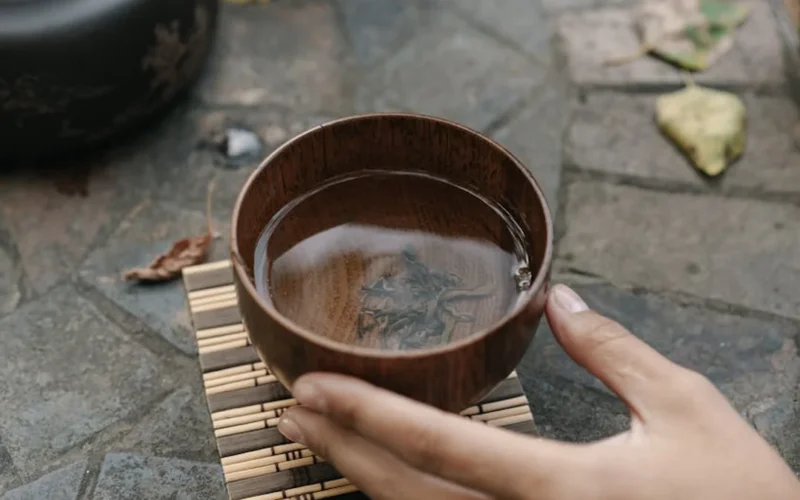
One month after placing the order, the tea arrived—promptly, though not with the dramatic flair of a well-timed vintage. I never had Autumn Pu’ers before and opted for William’s as a daily drinker. So far, I’m impressed. The first pour reveals an amber yellowish hue, lighter than traditional Spring or Summer Pu’ers. It’s a striking departure from the norm—almost alkaline, with a slight tang and sharpness that surprises. By the second steep, the aromas wake up, and the tea smooths into something unexpected. It never became astringent, which I wasn’t expecting from such a young Sheng.
This tea defies expectations, offering a rare balance of youth and maturity in a single cup.
Color and Texture
The tea’s color hints at its origin: a delicate balance of oxidation and aging. Unlike the deep amber of older Pu’ers, this one leans into a softer, more translucent tone. The texture is equally intriguing—subtle grit, almost like ground grains, lingers on the tongue. It’s a texture that defies the usual expectations of a Sh, but what stands out is the burned husk-like residue. I’m not sure what it is, but it’s clearly a byproduct of the processing. It may relate to specific growing regions or traditional techniques—perhaps a sign of sun-drying or fermentation methods unique to Autumn harvests. It’s not unpleasant, just unusual.
Flavor Evolution
By the third steep, the tea reveals its true character. The initial sharpness softens into a mellow sweetness, with a lingering earthiness that lingers. It’s a rare quality in a young Sheng—smooth, complex, and far from the aggressive bitterness many associate with the category.
This tea defies expectations, offering a rare balance of youth and maturity in a single cup.
What’s the role of that burned husk in shaping the tea’s character? Could it be a clue to the tea’s origin—or a flaw in the process?
Questions & Answers
How does the color of a young Autumn Pu’er differ from traditional Spring or Summer Pu’ers?
The young Autumn Pu’er has a softer, more translucent amber color compared to the deeper amber of older Pu’ers. This hue reflects its unique oxidation and aging balance, offering a striking departure from the norm.
What makes the texture of this young Autumn Pu’er unusual?
The texture features a subtle grit, almost like ground grains, and a burned husk-like residue. This unusual byproduct may relate to specific processing methods or growing regions, adding a distinctive character to the tea.
Why is the flavor evolution of this Autumn Pu’er considered rare?
The flavor evolves from initial sharpness to a mellow sweetness with lingering earthiness by the third steep. This smooth, complex profile is rare in young Sheng, defying the typical aggressive bitterness associated with the category.
Can the burned husk residue in the tea indicate its origin or processing method?
The burned husk-like residue may hint at the tea’s origin or processing techniques, such as sun-drying or fermentation methods unique to Autumn harvests. It suggests a connection to specific regional practices rather than a flaw in the process.
Originally reported by Reddit Puer Tea.