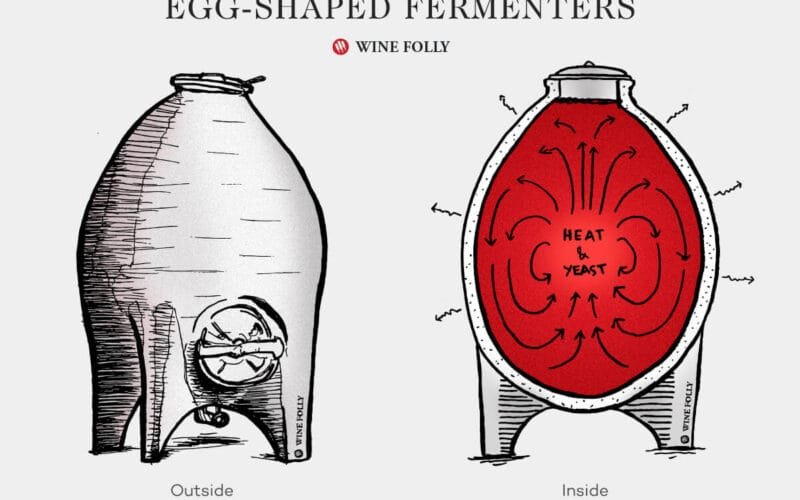
Let’s talk about the egg-shaped fermenter—the ancient vessel that’s making a comeback in modern winemaking. For millennia, winemakers have used oblong containers to ferment and age wine, from the clay qvevri of Georgia to the amphoras of Greece and Rome. Yet today, these egg-like structures are sparking debate: are they a relic of the past or a revolutionary tool for crafting distinctive wines? The answer lies in their history, their science, and the passionate arguments from those who swear by their magic.
The qvevri, those large, egg-shaped clay vessels, date back 8,000 years. Found in Georgia, these ancient containers were used to ferment wine, their smooth surfaces and rounded shape allegedly creating a natural vortex. This motion, some claim, keeps lees (dead yeast) suspended in the wine, building complexity and texture. Fast-forward to the 2000s, and Michel Chapoutier revived the concept with concrete egg fermenters, blending ancient design with modern materials. These vessels, made from semi-porous concrete, ceramic, or terracotta, allow controlled oxygen exposure—a process called micro-oxygenation. Unlike stainless steel, which seals wine away from air, or oak, which imparts flavor, concrete offers a middle ground: gradual aging without the toasty notes of wood.
But does it work? Some winemakers argue the egg’s shape creates a continuous convection current, mimicking the natural movement of fermenting wine. Others dismiss it as marketing hype, pointing out that science hasn’t yet proven its superiority over traditional methods. Still, the revival of these vessels suggests something deeper: a desire to reconnect with tradition. Whether you’re sipping a Georgian qvevri-aged wine or a modern concrete-fermented bottling, the question remains—does the shape matter?
Key points: The egg fermenter’s roots trace back 8,000 years, with qvevri still used in Georgia. Modern versions use semi-porous materials to mimic the natural aeration of clay. While some claim the shape enhances texture and aging, others argue the evidence is anecdotal.
So, is the egg fermenter a timeless classic or a fleeting trend.
So, is the egg fermenter a timeless classic or a fleeting trend? What’s your take?
Questions & Answers
Are concrete egg fermenters safe to use?
Concrete egg fermenters are generally safe if properly cleaned. They can harbor bacteria if not maintained, so regular sanitization is key to prevent contamination.
How long does it take to ferment eggs in concrete?
Fermenting eggs in concrete typically takes 3–5 days. Time varies based on temperature and egg freshness, but consistent conditions yield best results.
Information sourced from industry reports and news outlets.