⏱ 1 min read
The Short Version
Even after a fragile cork required emergency filtration, this 1974 Charles Krug reveals the haunting beauty of decay. While the dark fruit is fleeting, it yields to a sophisticated, savory landscape of smoked tobacco, leather, and earthy mushroom.
In This Article
Fifty-two years in a bottle is a lifetime for any Napa Valley Cabernet Sauvignon, and the 1974 Charles Krug shows precisely where time leaves its mark. Even with the assistance of a Durand, the cork proved too fragile to survive intact, requiring a quick filtration into a coffee server to save the liquid. While the wine has undeniably faded, it still retains enough structural integrity to offer a window into mid-seventies California viticulture.
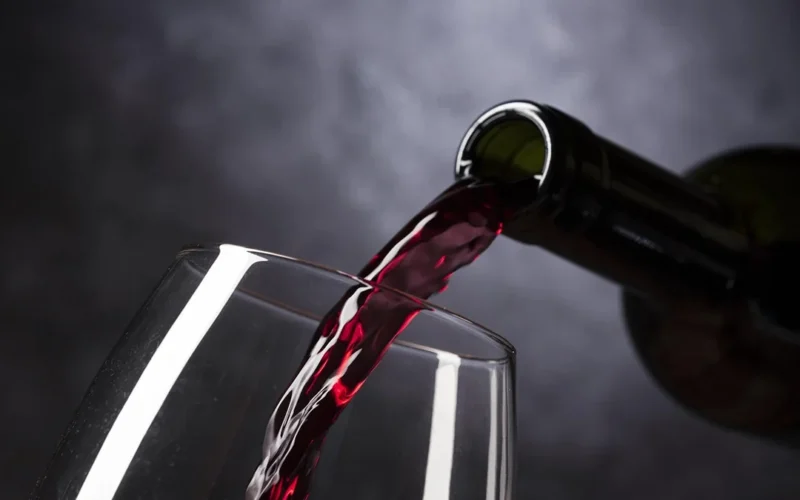
Dark fruits make the first impression on the palate but quickly fade to herbaceous and tertiary notes.
A Profile of Decay and Depth
The initial impression is driven by core dark fruits, specifically dark cherry, blackberry, blueberry, and black currant. However, these fruit notes are fleeting; they quickly give way to an expansive, almost overwhelming array of herbaceous and tertiary aromatics. One finds traces of fern, fennel, anise, menthol, and oregano alongside more heavy secondary notes like smoked tobacco, cedar, sandalwood, leather, tar, and even “grandma’s attic.” The deepest layer of the experience comes from earthy tertiary notes of mushroom and soy.
Dark fruits make the first impression on the palate but quickly fade to herbaceous and tertiary notes.
Texture and Structure
On the palate, the wine maintains a surprising level of concentration, feeling somewhat dense and even slightly sappy. This weight provides a necessary counterpoint to the evolving flavor profile as the primary fruit recedes. The acidity remains at a medium level, while the tannins sit at a medium plus intensity with a noticeably dusty texture. There is also a distinct mineral presence reminiscent of crushed rock that persists through the finish.
While the wine has moved well past its prime, it serves as a reminder of how Napa Cab evolves from fruit-forward power into something far more complex and savory. It is no longer about the brightness of the grape, but rather the nuanced interplay of wood, earth, and time.
When tasting aged California classics, do you value the lingering fruit or the complex tertiary aromas more?
Questions & Answers
What are the flavor profiles of an aged 1974 Charles Krug Cabernet?
The flavor profile consists of fleeting dark fruits such as blackberry, blueberry, dark cherry, and black currant that quickly transition into complex tertiary notes. These secondary and tertiary aromas include smoked tobacco, cedar, sandalwood, leather, tar, and mushroom. You may also detect herbaceous elements like fennel, anise, menthol, oregano, and fern. This evolution demonstrates how a Napa Cabernet shifts from fruit-forward power into a much more nuanced, savory experience shaped by decades of aging in the bottle.
How does the texture and structure of this vintage Cabernet feel on the palate?
The wine maintains a dense and slightly sappy texture that provides necessary concentration as the primary fruit flavors recede. Its structural components include medium acidity and medium plus tannins that possess a noticeably dusty feel. A distinct mineral presence, similar to crushed rock, persists through the finish of the wine. This weight and structural integrity allow the liquid to remain interesting even after fifty-two years of aging, providing a counterpoint to the fading fruit notes.
What should be done if a wine cork is too fragile to remove?
If a wine cork is too fragile to survive intact during removal, the liquid should be quickly filtered into a separate vessel like a coffee server. Even when using specialized tools such as a Durand, extremely old bottles may present corks that crumble upon contact. Rapid filtration ensures that the wine is saved from sediment or cork debris while allowing the drinker to evaluate the remaining liquid. This method preserves the wine's integrity when traditional extraction methods fail due to age.
Why does the 1974 Charles Krug Cabernet smell like grandma's attic?
The scent of grandma's attic comes from the expansive array of heavy secondary and tertiary aromatics that develop over many decades. As the wine ages, the bright fruit notes give way to complex scents like smoked tobacco, leather, cedar, and sandalwood. These deep, earthy layers, combined with herbaceous notes like fern and fennel, create a nostalgic and multifaceted aromatic profile. This specific scent is a hallmark of the interplay between wood, earth, and time in an aged Napa Valley Cabernet.
Originally reported by Reddit Wine.