⏱ 2 min read
The Short Version
Le Dôme shatters the Right Bank mold with a rare, commanding 80% Cabernet Franc blend that eclipses traditional Merlot profiles. This powerhouse delivers intense dark-berry flavors and gripping tannins, though its sheer structural depth demands another decade of patience.
A recent trip to Saint-Émilion yielded three standout bottles, but none captured the region’s potential quite like Le Dôme. While searching for Right Bank expressions that lean heavily on Cabernet Franc, the selection offered a masterclass in how varietal shifts can redefine traditional profiles. From bright whites to structured reds, these wines demonstrated the breadth of what the appellation can produce when balance is prioritized.
You could tell this wine needed more time in the bottle.
Balancing brightness and structure in white Bordeaux
The tasting began with an impressive Sauvignon Blanc blend, rounded out by Sémillon and Muscadelle. It delivered clean notes of citrus, peach, and pear, maintaining a well-balanced body and acidity. Most notably, the wine provided a longer finish than is typical for a white from this area. This unexpected persistence suggests that intentional blending can elevate a standard white into something far more memorable.
The red selections followed a different trajectory of complexity. One Merlot-dominant bottle (65% Merlot, 35% Cabernet Franc) offered plums, blackberries, and subtle spice within a medium to full-bodied frame. Its smooth tannins made it a fantastic example of classic Right Bank style, yet it was eclipsed by the final bottle in the flight.
The power of high-percentage Cabernet Franc
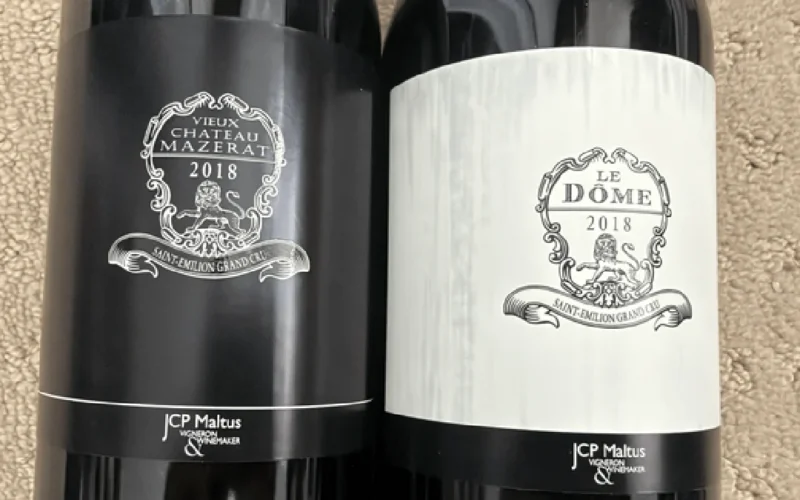
Le Dôme stood out as the star of the show due to its unconventional composition: 80% Cabernet Franc and 20% Merlot. Such a high concentration of Cabernet Franc is a rare find in Right Bank Bordeaux. You could tell this wine needed more time in the bottle. Despite being eight years old, the wine clearly demanded more patience, likely requiring another five to ten years to reach its peak.
The experience was defined by gripping tannins and intense dark-berry flavors that saturated the palate. A long finish anchored the wine, proving that varietal rarity often leads to superior structural depth. While the Merlot provides necessary softness, the sheer force of the Cabernet Franc creates a profile that is both distinct and commanding. It serves as a reminder that sometimes, stepping away from the standard Merlot template is exactly what a vineyard needs to achieve greatness.
When exploring Bordeaux, do you gravitate toward the traditional Merlot blends or seek out rarer varietal expressions like Cabernet Franc?
Questions & Answers
What is the grape composition of Le Dôme wine?
Le Dôme is composed of 80% Cabernet Franc and 20% Merlot. This high concentration of Cabernet Franc is considered an unconventional and rare find within the Right Bank Bordeaux region. While the Merlot component provides essential softness to the wine, the dominant Cabernet Franc creates a commanding profile characterized by intense dark-berry flavors and gripping tannins. This unique varietal shift allows the wine to achieve a level of structural depth that distinguishes it from traditional Merlot-heavy blends.
How does the flavor profile of Le Dôme differ from traditional Right Bank reds?
Le Dôme offers a distinct profile defined by intense dark-berry flavors and powerful, gripping tannins due to its high Cabernet Franc content. Most traditional Right Bank wines rely heavily on Merlot, which typically produces smoother tannins and fruit notes like plum and blackberry. In contrast, the 80% Cabernet Franc blend in Le Dôme creates a more commanding and saturated palate experience. This rarity in varietal expression provides a superior structural depth that sets it apart from the standard Merlot template.
How long should Le Dôme be aged to reach its peak?
Le Dôme likely requires another five to ten years of aging to reach its full potential. Although the wine is currently eight years old, its intense structure and gripping tannins indicate that it is not yet at its prime. The wine demands more patience in the bottle to allow its complex flavors and powerful tannins to harmonize perfectly. Allowing this additional time will help the wine transition from its current commanding state into its optimal drinking window for maximum enjoyment.
What are the tasting notes for white Bordeaux blends from Saint-Émilion?
White Bordeaux blends from this area often feature clean notes of citrus, peach, and pear. A well-crafted blend typically utilizes Sauvignon Blanc rounded out by Sémillon and Muscadelle to achieve a balanced body and acidity. When intentional blending is prioritized, these wines can provide an unexpectedly long and persistent finish that distinguishes them from standard white wines in the region. This combination of acidity and fruit notes ensures a refreshing yet memorable tasting experience for enthusiasts.
Originally reported by Reddit Wine.