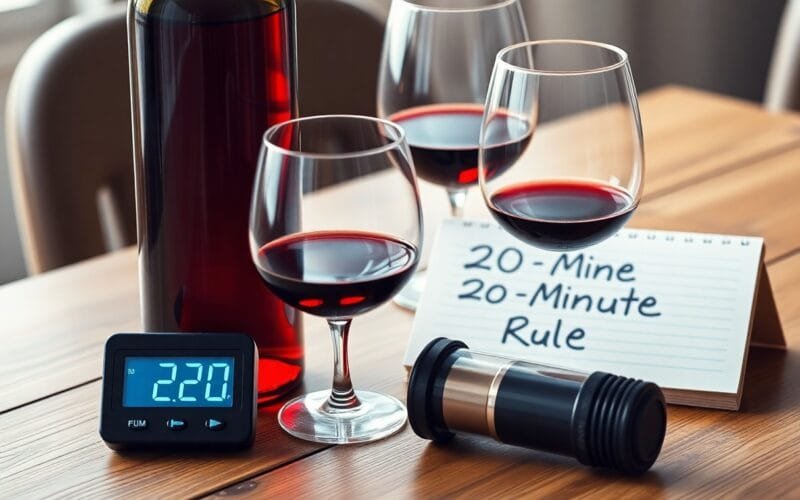
You can elevate your wine experience significantly by mastering the 20-minute rule, which suggests allowing wine to breathe for about 20 minutes before serving. This brief period enables the wine to open up and develop its aroma and flavor profile, enhancing your enjoyment. Whether you’re a novice or an enthusiast, understanding this simple guideline can transform how you appreciate your favorite varieties, ensuring each sip is a delight for your senses.
Understanding the 20-Minute Rule
The 20-Minute Rule suggests that letting certain wines breathe for about 20 minutes enhances their flavor and aroma by allowing volatile compounds to evaporate. For more insights on this guideline, check out Do You Know the ’20 Minute Rule’ for Serving Wine?
Types of Wines Suitable for 20-Minute Rule
Not all wines benefit equally from the 20-Minute Rule. Generally, full-bodied reds and some whites tend to improve significantly with a brief aeration. Here are the types of wines that are usually suitable:
Any wine that is bold or has complex flavors can often gain from this short exposure to oxygen.
Factors Affecting Wine Taste and Aroma
Your wine’s taste and aroma are influenced by various factors, including the grape variety, region of origin, and winemaking techniques. The balance of acidity, tannins, and sweetness also plays a significant role in complexity. Elements such as temperature and glassware impact the sensory experience too.
- Climate conditions during grape growing
- Soil type and terroir
- Winemaking methods (e.g., barrel aging)
- Serving temperature
- Glass shape and size
Any small adjustment can dramatically alter your perception of a wine’s attributes.
The interplay of these factors defines your unique wine experience. For instance, a wine served too warm may amplify alcohol aromas, while cooler temperatures might bring out more acidity and fruit flavors. Understanding this balance allows you to appreciate your wine fully.
- Grape ripeness at harvest
- Oaking level used in production
- Fermentation temperature
- Breathing time before serving
- Storage conditions
Any variation in these elements can lead to a distinct tasting experience.
Step-by-Step Guide to Applying the 20-Minute Rule
To effectively use the 20-minute rule for enjoying your wine, follow these steps. First, select the wine you want to drink and identify its ideal serving temperature. Next, if it’s too cold, place it in a warm location for approximately 20 minutes. Conversely, if it’s too warm, chill it in the fridge for 20 minutes. Assess the wine’s temperature after this period to ensure it aligns with the recommended range. Additionally, for a deeper understanding, explore What is the 20:20 rule? – The Latest from EWS – About.
| Step | Description |
| Select Wine | Choose your desired wine and check ideal temperature. |
| Warm or Chill | Adjust temperature based on the serving needs. |
| Assess | After 20 minutes, check the wine temperature. |
Tips for Enhancing Your Wine Experience
To elevate your wine enjoyment, consider a few simple practices that can transform your tasting experience. First, use the right glassware; specific shapes can enhance aromas and flavors. Experiment with food pairings, as complementary dishes can significantly enhance the wine’s profile. Temperature matters; serving reds slightly cooler than room temperature and whites chilled can maximize taste. Lastly, keep a wine journal noting your preferences and ratings for future reference.
- Choose stemmed glasses to prevent temperature transfer from your hand.
- Pair rich red wines with grilled meats, while crisp whites complement seafood.
- Try decanting bold reds to further aerate and soften tannins.
- Serve sparkling wines with a slight chill to accentuate their effervescence.
Knowing these tips can help you refine your palate and deepen your appreciation for the complexities of wine.
Pros and Cons of the 20-Minute Rule
Evaluating the effectiveness of the 20-Minute Rule reveals several advantages and disadvantages that can influence your wine experience. Understanding both aspects helps you make an informed decision about when and how to apply this breathing technique.
Pros
| Enhances Aroma | Allowing wine to breathe amplifies its bouquet, making the experience richer. |
| Softens Tannins | This exposure can smooth out harsh tannins in young red wines. |
| Improves Flavor | It’s often reported that breathing brings forward complex taste profiles. |
| Simple to Implement | The guideline is easy to follow with just a timer and your wine glass. |
Cons
| Time-Consuming | Waiting 20 minutes may not suit those on a tight schedule. |
| Not Universal | Some wines, like delicate whites, can be negatively affected by prolonged exposure. |
| Potential Over-Oxygenation | Excessive breathing can lead to a loss of flavor, especially in older wines. |
| Requires Experimentation | You may find that different wines benefit differently from this rule. |
Common Mistakes to Avoid
Over-breathing Your Wine
One frequent error is leaving wine to breathe for too long. While 20 minutes enhances many reds, some delicate varietals can lose their charm if overexposed to air. Pinot Noir, for example, can turn flat if left to oxidize excessively. Monitor your timer closely, especially with lighter wines.
Ignoring Temperature
Serving wine at the wrong temperature can undermine the benefits of the 20-minute rule. Reds should ideally be between 60-65°F, while whites benefit from being slightly cooler at around 50-55°F. If your wine is too warm or too cold, even the best breathing techniques won’t save it.
Using the Wrong Glassware
The choice of glass can impact your wine’s aroma and taste. A wide bowl encourages better aeration for full-bodied reds, while a narrower glass is ideal for whites. Always match the glass shape to your wine style to maximize the effects of breathing.
Frequently Asked Questions
How does the 20-minute rule affect wine temperature?
Bringing a wine to its ideal serving temperature often requires about 20 minutes of cooling or warming. For example, a white wine typically shines at around 45-50°F, while reds are best between 55-65°F. If your wine is too cold, you may undersell its flavors; conversely, serving a red that’s too warm can amplify alcohol and diminish its refreshing qualities.
Can the 20-minute rule be applied to all types of wine?
Generally, the 20-minute rule is effective across most wines, although variations exist. Sparkling wines may benefit from a quick chill, while heavier red wines can sometimes require a bit longer if they’ve been stored at room temperature. Tailoring the time to the specific varietal enhances your tasting experience.
What if I don’t have a thermometer?
If you lack a thermometer, a simple touch test works well. If your white wine feels icy to the touch, it may be too cold-12-15 minutes in the fridge should suffice. For reds, if it feels noticeably warm, letting it sit out for 20 minutes can help bring it to the right temperature.
To wrap up
From above, you can appreciate how the 20-Minute Rule enhances your wine enjoyment by allowing it to breathe before serving. This simple yet effective practice lets the flavors develop, providing a richer tasting experience. By applying this rule, you elevate your wine-drinking occasions, ensuring each sip reflects the wine’s true potential. Embrace this straightforward guideline, and transform your approach to wine, making every pour a more satisfying moment.