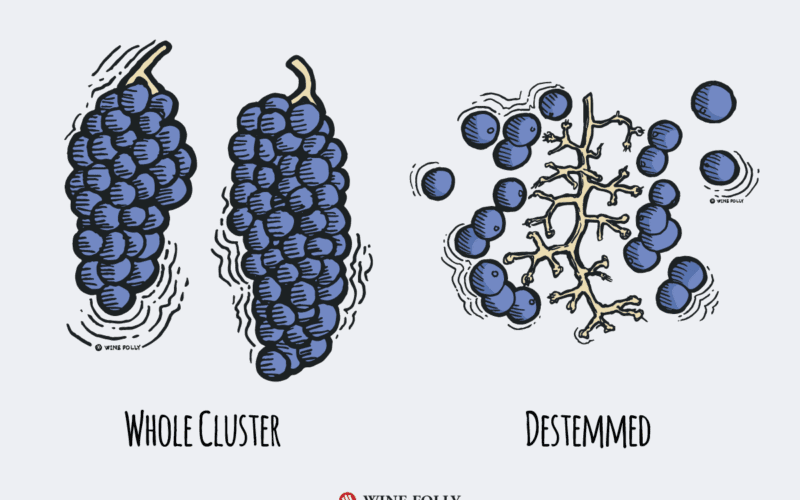
Let’s talk about the “stemmy” wines that have left many drinkers perplexed. The answer lies in a centuries-old winemaking technique called whole cluster fermentation—where grapes are fermented with their stems intact. This method, once a necessity before destemming machines, has resurged as a tool to craft wines with bold structure, herbal intrigue, and a unique interplay of acidity and fruit. But why does it often taste like a mix of greenery and candied sweetness? Let’s unravel the science and art behind it.
Whole cluster fermentation isn’t just about stems—it’s about chemistry. Stems inject potassium, which alters the wine’s acidity and pH, creating a balance that can either elevate or destabilize a wine. They also flood the must with methoxypyrazines, the compounds responsible for green, herbal notes. These elements demand a counterbalance: high tannins, intense fruit, or even minerality to prevent the wine from tasting flat or vegetal. Bordeaux varieties like Cabernet Sauvignon rarely use whole clusters for this reason, but Syrah and Pinot Noir embrace the technique to amplify spice, earthiness, and texture.
The impact of stems isn’t uniform. A wine with 20% whole clusters might taste green and vegetal, while one with 60% could blend candied fruit and dried herbs into something seductive. This variability hinges on stem quality—flexible, green stems vs. lignified, brown ones. Winemakers debate whether lignification (stem browning) signals ripeness or overripeness, but the key takeaway is that stems shape the wine’s identity. They add tannin, structure, and a botanical complexity that can soften acidity naturally without additives.
Key Points: Whole clusters amplify complexity by introducing tannin, spice, and herbal notes, but they require high-quality fruit to avoid green, vegetal flavors. Stem quality—whether flexible or lignified—directly influences the wine’s character, from freshness to aging potential. Aging can mellow stemmy notes, transforming them into spicy, woody undertones over time.
So, next time you encounter a “stemmy” wine, is it a flaw—or a sign of something deeper.
So, next time you encounter a “stemmy” wine, is it a flaw—or a sign of something deeper?
Questions & Answers
What is whole cluster fermentation?
Whole cluster fermentation uses whole grape clusters, including stems, during winemaking. It adds structure and complexity, common in Pinot Noir and Syrah.
Does whole cluster fermentation add tannin?
Yes, whole cluster fermentation adds tannin from stems, giving wine a firmer structure. It also imparts earthy, herbal notes.
Information sourced from industry reports and news outlets.