Father

How Roasters Taste Fresh Coffee Without Waiting Weeks

How Roasters Taste Fresh Coffee Without Waiting Weeks

Let’s talk about the quiet art of cupping fresh coffee—yes, even before it’s rested. Light roasts, with their bright acidity and floral notes, often need weeks to mellow, but roasters still need to evaluate quality early. How do they do it without waiting? The answer lies in a blend of science, intuition, and a few clever tricks that turn the clockwork of coffee into a dance of precision. First, roasters don’t wait for perfection—they wait for enough. A few days post-roast might reveal a coffee’s raw potential, but it’s not the full story. Think of it like tasting a young…
Read More
Why Big Beans Are Breaking Your Roast

Why Big Beans Are Breaking Your Roast

If your Tanzanian beans are losing flavor faster than you can say “roast,” you’re not alone. Roasters often grapple with the tricky balance between bean size and roast potential, and when beans exceed 7mm in diameter, the consequences can be subtle but devastating. Larger beans have less surface area relative to their volume, which means they retain moisture longer—and that’s a problem. The result? A fruity start that fades quickly, leaving behind an ashy note that feels like a betrayal of the bean’s promise. The key lies in understanding how size impacts moisture retention. Beans over 7mm struggle to dry…
Read More
Modding Your Rancilio Silvia: Where to Place That Pressure Gauge

Modding Your Rancilio Silvia: Where to Place That Pressure Gauge

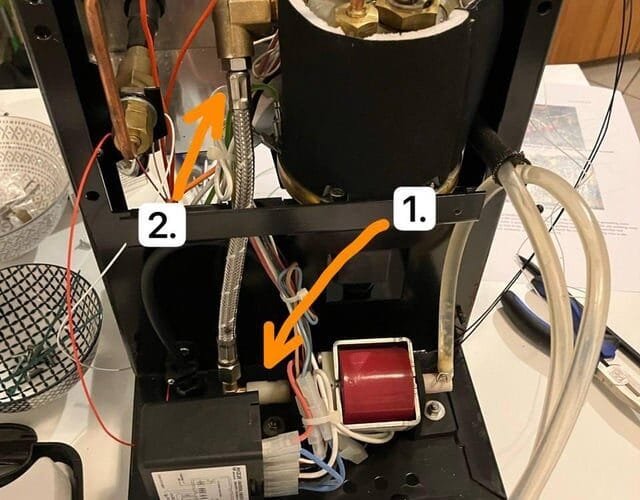
Real talk: If you're modding your Rancilio Silvia, the placement of your pressure gauge isn’t just a tweak—it’s a decision that shapes how you understand your machine’s performance. The debate over T-connector positions has sparked endless threads, but the truth is simpler than the arguments suggest. Position 1 measures pump pressure, which is inherently less useful for brewing, while position 2 captures brew pressure—the actual metric that matters. Position 3, meanwhile, is a nightmare of engineering, requiring custom fittings that most homebrewers can skip. If you’re not chasing a pressure dimmer, simplicity wins. The portafiler screw-mounted gauge is the unsung…
Read More
Why Your Espresso Is Stalling (And How to Fix It)

Why Your Espresso Is Stalling (And How to Fix It)

Get ready to sip on this: Your espresso machine isn’t rejecting you—it’s screaming for a better grind. The Breville Bambino’s electric grinder is a marvel, but even the best tools need finesse. If your portafilter is clogging like a highway during rush hour, the culprit is likely your grind size. Espresso demands a balance between finesse and flow, and the wrong setting can turn your shot into a waterlogged disaster. The Bambino’s “espresso” setting is a starting point, but it’s not a magic wand. Grind too fine, and you’re inviting a clogged filter; too coarse, and you’re left with under-extracted,…
Read More
DE1Pro and Lagom 01: A Game-Changer for Coffee Enthusiasts?

DE1Pro and Lagom 01: A Game-Changer for Coffee Enthusiasts?

Here’s something to stir your curiosity: After swapping my Lelit Bianca V3 for a DE1Pro and Lagom 01, I’ve unlocked a new level of coffee precision—without sacrificing the ritual. The upgrade wasn’t just about speed or tech specs; it was about redefining how I interact with my machine. Let’s cut to the chase: the DE1Pro’s 4-minute warmup time (vs. the Bianca’s 17 minutes) is a revelation. It’s not just about convenience—it’s about reclaiming moments. No more waiting while the machine preheats; no more sacrificing a latte for a morning routine. The real magic lies in control. The Bianca’s needle valve…
Read More
The Best Commercial Grinders for Your Coffee Cart (And Why You Should Care)

The Best Commercial Grinders for Your Coffee Cart (And Why You Should Care)

If you’re running a coffee cart, your grinder isn’t just a tool—it’s the heartbeat of your operation. The right machine can transform a decent cup into a standout experience, but choosing between a $625 Eureka Atom or a $1,860 Mahlkönig E65s isn’t just about budget. It’s about speed, consistency, and whether you’re willing to trade portability for precision. Let’s cut through the noise. The Fiorenzato AllGround Sense is a standout contender. At 850€, it’s a mid-tier option that balances performance and simplicity. It’s used in cafes, but its compact design and intuitive controls make it a solid choice for carts.…
Read More
Inside the Espresso Machine Shop: What You Need to Know

Inside the Espresso Machine Shop: What You Need to Know

Here’s what you need to know about espresso machines, grinders, and the wild world of coffee equipment. I work in a shop that sells and repairs machines from Profitec, ECM, Bezzera, Rocket, Quickmill, La Marzocco, and Lelit. We also carry grinders from Eureka, Mazzer, Fiorenzato, and Mahlkoenig. Whether you’re browsing in person or online, the goal is to help you find gear that works—and lasts. The biggest divide between brands lies in build quality and precision. La Marzocco and Bezzera machines, for example, are built for durability, with heavy cast iron and precision engineering. They’re not cheap, but they’re designed…
Read More
The Bitter Truth: When Tradition Outshines Craft

The Bitter Truth: When Tradition Outshines Craft

If you’ve ever wondered why your favorite brews feel so... perfect, you’re not alone. The beer world’s obsession with microbrews often masks a simple truth: lagers, the backbone of mass-produced beer, are harder to master than any craft style. Major breweries like Budweiser and Heineken didn’t just stumble into success—they spent decades refining recipes, hiring scientists to dial in consistency. Their lagers are engineered for reliability, not experimentation. Meanwhile, microbreweries, for all their hype, often lack the infrastructure to replicate that precision. So when you’re handed a lager, you’re getting a product that’s been tested, tweaked, and perfected. The same…
Read More
Mastering the Water Profile for Natural Processed Coffee

Mastering the Water Profile for Natural Processed Coffee

This is worth savoring: Natural processed coffees demand a water profile that balances acidity and sweetness without overcomplicating things. The challenge lies in dialing in the right mineral composition to avoid sourness while amplifying the fruit-forward brightness these beans are known for. If you’ve tried TWW light roast and found yourself chasing a tart profile, you’re not alone—this is a common pitfall when minerals aren’t dialed precisely. The key lies in mineral ratios. Magnesium and calcium are your allies, but they’re not the whole story. Sodium and potassium play critical roles in buffering acidity and stabilizing alkalinity. Without them, even…
Read More
Direct-Trade Dreams for Yunnan Coffee: A New Path to Micro-Lots?

Direct-Trade Dreams for Yunnan Coffee: A New Path to Micro-Lots?

Imagine a world where Yunnan’s finest coffee estates bypass intermediaries and connect directly with global buyers. This isn’t fantasy—it’s a conversation happening in coffee circles, fueled by frustration and opportunity. For years, Yunnan has quietly produced some of the world’s most intriguing coffees, yet its micro-lots remain trapped in a supply chain that dilutes their potential. Farmers in Dali and Baoshan struggle to sell their premium beans, while roasters chase elusive profiles that never materialize. The gap between quality and access is widening, and the solution? A direct-trade model tailored to Yunnan’s unique challenges. The idea isn’t new. Platforms like…
Read More