It’s a common practice to microwave water for your tea, but many myths surround this convenience method. You might think it’s just as effective as boiling water on the stove, yet doing so can lead to uneven heating and a less than optimal brewing experience. In this post, we’ll unpack the reasons why microwaving water can undermine your tea’s flavor and aroma, and clarify the science behind the perfect cup.
Understanding Tea Brewing
Tea brewing is a delicate balance between water quality, temperature, and steeping time. Proper brewing allows you to extract the full flavors and benefits of your chosen tea. For more insights, check out Microwaving Your Tea, The Controversy Explained and Refuted.
The Importance of Water Temperature
Water temperature significantly impacts your tea’s flavor profile and health properties. Different teas require varying temperatures to optimize their unique characteristics.
Temperature Requirements
| Tea Type | Optimal Temperature (°F) |
| White Tea | 160-185 |
| Green Tea | 175-185 |
| Oolong Tea | 190-200 |
| Black Tea | 200-212 |
| Herbal Tea | 212 |
Different Types of Tea and Brewing Needs
Choosing the right tea isn’t just about preference; it’s about understanding brewing needs. Each type of tea has specific water temperatures and steeping times that enhance flavor and extraction.
Brewing Requirements
| Tea Type | Steeping Time (minutes) |
| White Tea | 4-5 |
| Green Tea | 2-3 |
| Oolong Tea | 3-5 |
| Black Tea | 3-5 |
| Herbal Tea | 5-7 |
- Different teas thrive at distinct temperatures.
- Steeping times vary among types for flavor balance.
- Use a thermometer for precision.
- Loose leaf teas often need specific care.
- Adopting the right practices enhances your tea experience.
Knowing the specific requirements for each tea type can significantly improve your brewing results and overall enjoyment.
Common Myths About Microwaving Water
Several misconceptions persist about microwaving water, particularly regarding its safety and impact on brewing quality. These myths can lead to unnecessary caution and deter you from using this quick method for water heating. Addressing these myths reveals a more accurate understanding of what to expect when using the microwave for your tea preparation.
Myth: Microwaved Water is Unsafe
Many people worry that microwaving water can lead to superheating, where water is heated beyond its boiling point without actually boiling. While this can occur, practicing safety, such as using a microwave-safe container and placing a wooden spoon in the water, reduces the risk. Overall, microwaving water is safe when done correctly.
Myth: Microwaving Water Affects Taste
The belief that microwaved water alters the taste of your tea hinges on the idea that uneven heating or superheating negatively impacts flavor. However, research shows that the temperature of water, rather than the method of heating, is primarily responsible for the release of flavors and aromas in tea. As long as your water reaches the appropriate temperature for the specific type of tea you’re brewing, the taste should remain consistent regardless of whether you use a kettle or microwave for heating.
The Science Behind Microwaving Water
When you microwave water, electromagnetic waves excite water molecules, generating heat. This process relies on the microwave’s frequency, which specifically targets polar molecules, causing them to vibrate and warm up. The energy is absorbed unevenly, leading to rapid heating in some areas while others remain cool.
How Microwaves Heat Water
Microwaves heat water through dielectric heating, where polar water molecules oscillate in response to the microwave field. This movement creates friction, which produces heat. Depending on the power level and the volume of water, the heating process can occur quickly, often catching users off guard.
Temperature Consistency and Hot Spots
Heating water in a microwave often results in inconsistent temperatures, creating hot spots and cooler areas. This phenomenon occurs because microwaves may not distribute heat evenly throughout the water, which can affect the brewing process of tea, leading to suboptimal flavors.
Temperature Consistency and Hot Spots
| Issue | Explanation |
| Inconsistent Heating | Microwaves may not circulate water uniformly, resulting in varying temperatures. |
| Hot Spots | Localized areas of higher temperature can form, which might be harmful in the brewing process. |
| Superheating | Water can exceed boiling point without bubbling, posing a risk of sudden eruption. |
Understanding the implications of temperature inconsistencies and hot spots in microwaved water is important for your tea brewing. Uneven heating can lead to certain tea leaves scalding while others remain under-extracted, resulting in a poorly balanced flavor profile. Additionally, superheating can cause a sudden release of steam, which poses a danger when you try to remove the container from the microwave. Therefore, ensuring even heating is necessary for the perfect cup of tea.
Temperature Consistency and Hot Spots
| Impact on Brewing | Resulting Flavor |
| Inconsistent Brewing Times | Varied steeping effects lead to either bitterness or weak tea. |
| Temperature Fluctuations | Can inhibit the proper infusion of aromatics and necessary oils. |
| Potential for Eruptions | Superheated water may boil violently, risking burns or spills. |
Alternatives to Microwaving Water
Exploring alternatives to microwaving water for tea can lead to a more satisfying brewing experience. Traditional methods such as stovetop kettles, electric kettles, and even some countertop appliances can not only heat water more evenly but also allow for better control over temperature settings, which is important for different types of tea.
Kettles and Their Benefits
Kettles are specifically designed for boiling water, and they offer various advantages over microwaves. With temperature settings ranging from 160°F for delicate greens to boiling 212°F for black teas, kettles ensure you brew each tea type perfectly. Many models even feature automatic shut-off functions, enhancing safety while saving energy.
Other Methods of Heating Water
Beyond kettles, you can also heat water using stovetops or even a coffee maker. Each method offers unique benefits: stovetops provide high heat control, while coffee makers can simplify the process if you’re in a hurry. Additionally, you might utilize an immersion heater, which quickly heats water within a cup without requiring additional equipment.
Stovetops excel in versatility, allowing you to boil water in a pot of any size. For example, a large pot can accommodate multiple cups for sharing with friends, while a small saucepan heats quickly for personal use. A coffee maker simplifies heating, as you can brew your tea directly through the machine using hot water. Immersion heaters, though sometimes less common, deliver quick results and are ideal for travel or limited kitchen spaces, ensuring you can enjoy a perfectly brewed cup of tea anywhere.
Practical Tips for Brewing Tea
To brew the perfect cup of tea, focus on quality ingredients and precise techniques. Start with fresh, filtered water and avoid using previously boiled water, as it loses oxygen necessary for flavor. Measure your tea leaves accurately and steep for the recommended time. Here’s a quick checklist:
- Use fresh, quality tea leaves.
- Heat water to the appropriate temperature.
- Steep for the right amount of time.
- Enjoy your tea without distractions.
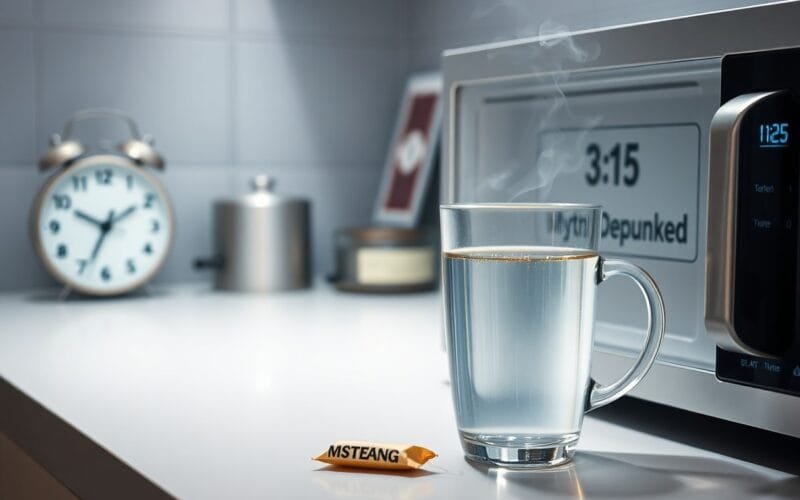
Thou can discover more about tea preparation methods by checking out Microwave Myths DEBUNKED!.
The Ideal Water Temperature for Different Teas
For optimal flavor extraction, match your tea type to the right water temperature. Here’s a breakdown:
| Green Tea | 160-180°F (71-82°C) |
| White Tea | 160-185°F (71-85°C) |
| Oolong Tea | 190-200°F (88-93°C) |
| Black Tea | 200-212°F (93-100°C) |
| Herbal Tea | 212°F (100°C) |
Brewing Times and Techniques
Each tea type requires specific brewing times for ideal flavor development. Too short a steep can leave your tea weak, while too long can deliver bitterness. Generally, green teas steep for 2-3 minutes, oolongs for 3-5 minutes, and black teas for 3-5 minutes as well, while herbal teas might need 5-7 minutes. Achieving the right infusion is about personal preference, so you may want to experiment within these ranges to find your sweet spot.
Expert Opinions on Tea Brewing
Insights from Tea Masters
Tea masters stress the importance of water temperature and brewing times tailored to specific teas. For instance, green teas thrive at lower temperatures, ideally around 175°F (80°C), while black teas benefit from boiling water. They suggest that these nuances significantly enhance the flavor profile and overall experience, emphasizing that precise brewing techniques are vital to extracting the best characteristics from each leaf.
Research on Brewing Methods
Studies indicate that conventional brewing methods outperform microwaving in terms of flavor extraction. Controlled brewing allows for optimal temperatures, precise timing, and even water distribution, contributing to a more rounded taste and aroma. Research published in the Journal of Food Science has shown that tea brewed traditionally can yield up to 30% more antioxidants compared to those prepared in a microwave.
Further investigations reveal that differing brewing methods impact not only antioxidant levels but also volatile compounds integral to tea’s aroma and flavor. A study from the University of Science and Technology highlighted that traditional steeping allowed for gradual flavor development, while microwaving often leads to uneven heating, resulting in a flat taste profile. This difference explains why enthusiasts recommend manual brewing methods, advocating for a method that respects the delicate nature of tea leaves.
To wrap up
Conclusively, when considering how to prepare your tea, you should be aware of the drawbacks of microwaving water. Doing so can lead to uneven heating, which affects the extraction of flavors and aromas from your tea leaves. By opting for traditional methods, like using a kettle or a stovetop, you ensure that your tea reaches the ideal temperature for optimal taste. This small adjustment in your brewing process can significantly enhance your overall tea experience.
FAQ
Q: Why is it not recommended to microwave water for making tea?
A: Microwaving water can lead to uneven heating, resulting in hot spots. This prevents proper infusion of tea leaves, affecting flavor and strength. Additionally, water heated in a microwave may not reach the ideal temperature for specific types of tea.
Q: Does microwaving water change its chemical properties for tea making?
A: Microwaving water does not change its chemical properties, but it can alter the temperature distribution. This uneven heating may impact the extraction of flavors and imperative oils from the tea leaves, leading to a subpar tea experience.
Q: Are there safety concerns with microwaving water for tea?
A: Yes, microwaving water can create the risk of superheating, where water exceeds its boiling point without actually boiling. This can lead to sudden boiling when disturbed, potentially causing burns. Using a kettle is a safer alternative for heating water.