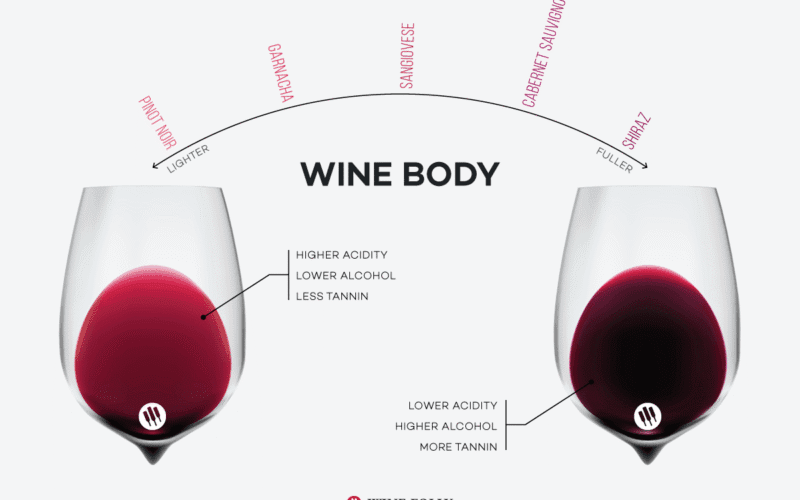
The verdict is in: Wine body isn’t about sweetness or tannin—it’s about the weight of the glass. Think of it like milk fat: whole milk feels rich, skim milk feels light. Wine body operates on the same principle, but with more nuance. It’s the sum of alcohol, acidity, and texture, and it shapes how a wine feels in your mouth. Whether you’re sipping a crisp Pinot Noir or a bold Cabernet, understanding body helps you navigate flavor profiles and find wines that align with your palate.
Light-bodied wines are the minimalist classics. They’re low in alcohol (typically under 13.5%) and tannin, with higher acidity. This combination creates a sleek, almost effervescent mouthfeel. Pinot Noir is the archetype here—its delicate structure and bright acidity make it feel light, even when it’s red. But don’t mistake light for simple: These wines often have vibrant fruit and floral notes that linger. Cooler climates amplify this effect, adding a sharp, almost spicy edge that contrasts with their softness.
Medium-bodied wines straddle the line between restraint and richness. They’re often the most approachable, balancing alcohol and acidity to create a balanced, food-friendly profile. A Merlot with 13% ABV and minimal oak aging falls into this category, offering a plush yet refreshing experience. Acidity here acts as a counterweight to alcohol, preventing heaviness. It’s the go-to for everyday drinking, whether you’re pairing it with a salad or a grilled cheese sandwich.
Full-bodied wines are the indulgence category. High alcohol (14.5%+), bold tannins, and lower acidity create a dense, almost velvety texture. Cabernet Sauvignon and Syrah are the kings here, their structure feeling like a warm embrace. Oak aging adds layers of vanilla and spice, while glycerol—a byproduct of fermentation—enhances the perception of weight. These wines demand attention, often standing alone without food. They’re for those who crave intensity and complexity.
Medium-bodied wines balance alcohol and acidity for approachable, food-friendly drinking.
KEY POINTS Light-bodied wines prioritize acidity and structure, making them versatile and refreshing. Medium-bodied wines balance alcohol and acidity for approachable, food-friendly drinking. Full-bodied wines lean into richness and tannin, offering bold, immersive experiences.
CLOSE What’s your ideal wine body—and which bottle will you try first? Share your picks below.
Questions & Answers
What does wine body mean?
Wine body refers to the weight or mouthfeel of a wine, determined by sugar, alcohol, and acidity levels. It ranges from light to full-bodied.
How do you taste wine body?
Taste wine body by sipping slowly, noting the texture and richness. Light-bodied wines feel thin, while full-bodied feel thick and heavy on the palate.
Information sourced from industry reports and news outlets.