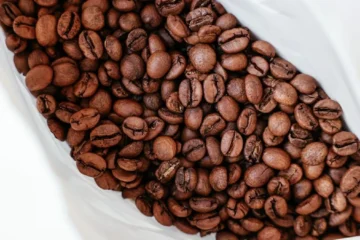
What if your morning coffee could save a life? New research is proving that spent coffee grounds—often discarded as waste—might just become a powerful tool in the fight against contaminated water. Scientists at Loughborough University and collaborators in India have discovered ways to transform coffee waste into low-cost adsorbents capable of removing heavy metals like lead, copper, and zinc from water. This isn’t just lab science; it’s a real-world solution with measurable results.
The breakthrough hinges on turning coffee grounds into biochar, a porous material with a knack for trapping pollutants. In one study, researchers heated used coffee grounds from a university cafeteria to create a highly porous biochar that removed nearly 98% of lead from water. The process, optimized for cost and efficiency, allowed the material to hold 4.9 milligrams of lead per gram. “By refining decomposition conditions, we turned waste into a practical tool for water treatment,” said lead author Monika Mahajan. The same team also tested coffee-based adsorbents for copper and zinc, achieving removal rates of up to 96% in fixed-bed columns.
Another study blended coffee waste with rice husk biochar to tackle copper and zinc contamination. The mix proved highly effective, outperforming single-material solutions. “We’re repurposing what’s often seen as trash into a resource,” said Basmah Bushra, lead author of the second study. The work underscores how circular economy principles can turn coffee waste into a sustainable solution for water purification.
Key points: Coffee grounds can be converted into biochar that removes 98% of lead. Blending coffee waste with rice husk biochar boosts copper and zinc removal to 96%. These methods offer affordable, scalable solutions for water treatment.
So, what other coffee byproducts might hold the key to solving environmental challenges.
So, what other coffee byproducts might hold the key to solving environmental challenges? Share your thoughts below.
Questions & Answers
How do coffee grounds help clean water?
Coffee grounds adsorb pollutants like heavy metals and organic compounds. They bind to contaminants, making water safer. This method is cost-effective and eco-friendly for water treatment.
Can coffee grounds remove oil from water?
Yes, coffee grounds can absorb oil and grease. Their porous structure traps oil particles, helping clean oil-contaminated water efficiently.
Information sourced from industry reports and news outlets.