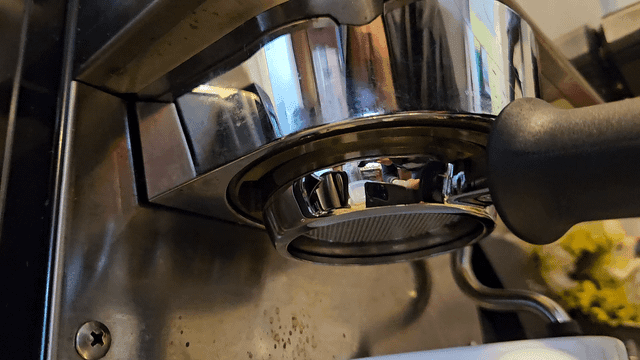
There’s something brewing in the world of espresso enthusiasts—specifically, a growing obsession with the bottomless porta filter. For those who’ve ever stared at their machine, wondering if that drip of water is a sign of success or failure, the Rancilio Silvia M owner’s latest experiment offers a window into the delicate dance of extraction. The setup? A Eureka Mignon Speciality grinder, a new bottomless porta filter, and an 18g VST basket. The question? Why is water dripping sideways, and is that a red flag?
The bottomless porta filter’s design is all about visibility, but it’s also a mirror for your technique. The user’s 17g dose—just 1g shy of the basket’s capacity—suggests a tight roast or a grind that’s too fine. Water dripping from the sides could signal uneven tamping or a channeling issue, where liquid finds a shortcut through underpressed coffee. The filter’s fit feels locked against the gasket, but its inability to screw in fully might mean the seal isn’t perfect. A leaky seal can dilute the shot, turning a bold espresso into a watery disappointment.
Channeling is the silent thief of espresso quality. It’s not just about the grind size—it’s about how the grounds are packed. A poorly tamped basket can create a path for water to rush through, bypassing the coffee entirely. The VST basket’s wider diameter might exacerbate this, requiring a more precise tamping technique. Meanwhile, the dripping water could also be a sign of over-extraction, where the coffee is so saturated it’s leaching into the portafilter’s sides.
The key to unlocking this setup lies in balance. A grind that’s too fine will choke the flow, while one that’s too coarse will let water rush through without extracting enough flavor. The dose matters too: 17g is on the lower end, which might mean the coffee isn’t fully saturated. Experiment with increasing the dose slightly to see if the flow stabilizes. Also, check the portafilter’s alignment—any tilt can create uneven pressure.
Have you ever faced a similar drip dilemma.
What’s your take on the bottomless porta filter’s role in espresso? Have you ever faced a similar drip dilemma?
Key Points: Grind consistency is non-negotiable—too fine, and you’ll fight the flow; too coarse, and you’ll lose flavor. Tamping must be even, or water will find shortcuts. Monitor the portafilter’s seal and alignment, as a leaky connection can ruin the shot.
Close: What’s your take on the bottomless porta filter’s role in espresso? Have you ever faced a similar drip dilemma?
Questions & Answers
How to clean a bottomless porta filter?
Remove, rinse under water, use mild detergent. Scrub with brush, soak if needed. Dry thoroughly to prevent mold. Avoid harsh chemicals to preserve filter integrity.
Can I use a bottomless porta filter on any espresso machine?
No, it’s designed for specific models. Check compatibility with your machine. Not all machines support the same filter size or type. Always verify before purchase.
Information sourced from industry reports and news outlets.