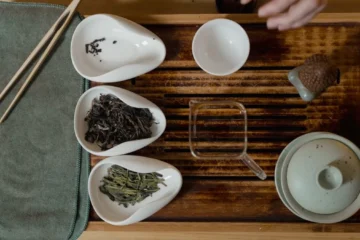
This is worth savoring: A friend’s mysterious tea from China has left even seasoned palates stumped. Two varieties—Longjing’s crisp greenness and Shui Xian’s earthy depth—are identified, but the third defies easy classification. It leans into high mountain Taiwanese oolong territory, yet its flavor profile strays from the familiar. Instead of floral delicacy, it leans into vegetal clarity, with buttery undertones that feel more like a whisper than a flourish. The question isn’t just about identification—it’s about decoding a tea that resists easy categorization.
The key lies in the interplay of oxidation and terroir. Taiwanese oolongs often balance floral and vegetal notes, but this tea’s emphasis on the latter suggests a higher oxidation level or a specific region’s influence. Fujian’s complex oolongs, for instance, sometimes exhibit vegetal sharpness paired with subtle sweetness. Could it be a rare cultivar from Guangdong, where oolongs often marry green tea’s vegetal clarity with oolong’s depth? The buttery notes hint at fermentation nuances, while the lack of overt floral character points to a tea that’s more about structure than aroma.
Consider the processing: A longer oxidation period or a unique withering technique might amplify vegetal traits. Some Taiwanese oolongs, like those from Nantou’s high-altitude estates, develop a grassy brightness that lingers. Yet this tea’s buttery undertones suggest a balance between oxidation and fermentation, avoiding the astringency of lower-grade oolongs. It’s a tea that thrives in contrast—sharp yet smooth, vegetal yet rounded.
If you’ve encountered teas with similar profiles, share your insights. What regional quirks or processing methods might bridge the gap between known varieties and this enigma? The answer could redefine how we think about oolong’s boundaries.
Drop a line below—let’s unravel it together.
What’s your guess about this tea’s origin? Drop a line below—let’s unravel it together.
Questions & Answers
What does oolong tea taste like?
Oolong tea has a sweet, floral, and sometimes woody flavor. It can range from light and citrusy to rich and smoky, depending on oxidation levels and processing.
How is oolong tea different from green tea?
Oolong is partially oxidized, giving it a complex flavor and aroma. Green tea is unoxidized, with a fresher, grassier taste. Oolong also has a higher caffeine content than most green teas.
Information sourced from industry reports and news outlets.