When you’re blindfolded and handed four white teas from unexpected corners of the world, the only thing you can rely on is your palate. This Zoom event, organized by Identitea and Sinoteca, served up a masterclass in terroir-driven contrasts. The teas—each a world apart—tested our ability to decode flavor without knowing their origins.
The first, a spring 2024 Iranian white tea from Darjeeling cultivars, was a revelation. Clean, floral, and honeyed, it carried notes of white flowers and clover honey. The sweetness deepened with each infusion, yet it never veered into astringency. Sourced near the Caspian Sea, it felt like a quiet storm of subtlety, proving that white tea can be both bold and restrained.
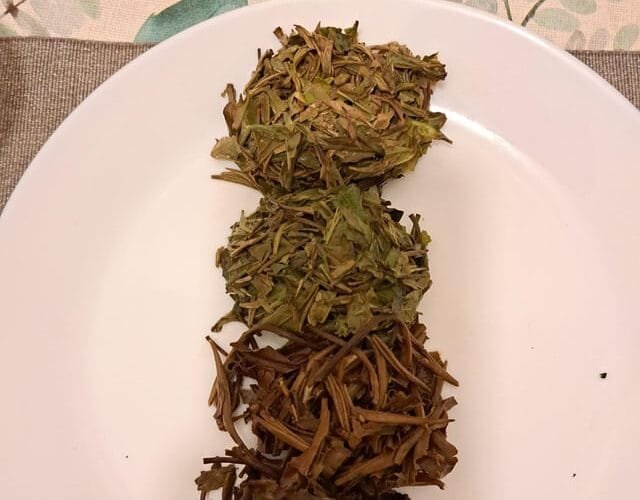
Next came the 2023 Pai Mu Tan (Fuding Da Bai), a wild card. Banana undertones dominated, sharp and underripe, while the finish hinted at nuts. The second infusion transformed it into something surreal—a banana peanut butter smoothie, if such a thing existed. The wet leaves exuded a cocoa/carob aroma, grounding the eccentricity in comfort.
The Yue Guang Bai, a 2024 sun-dried old tree from Laos, was a journey. The first steep delivered balsamic and licorice-like notes, medicinal yet intriguing. By the second infusion, it burst into prune sweetness, then settled into saffron and spice. It was the most complex, a testament to how age and processing can elevate a tea’s narrative.
Coffee and leather opened the cup, evolving into sugary, chocolatey depths.
Finally, the wild Assamica from Laos initially felt like aged Gong Mei. Coffee and leather opened the cup, evolving into sugary, chocolatey depths. It lingered near shu pu’er’s earthiness, a bridge between white and fermented tea.
KEY POINTS: White tea’s diversity isn’t just about origin—it’s about how terroir shapes character. The Iranian tea showed restraint, the Pai Mu Tan embraced eccentricity, the Yue Guang Bai offered depth, and the Assamica blurred boundaries. Each taught a lesson in tasting beyond the obvious.
CLOSE: Which tea surprised you the most? Did you guess any correctly? Share your thoughts—let’s keep the conversation brewing.
Questions & Answers
How to identify the differences in white teas during a blind tasting?
Focus on aroma, taste, mouthfeel, and leaf appearance. Note sweetness, astringency, and floral notes. Compare each tea’s character without visual cues to spot unique traits.
What tools are needed for a guided blind tasting of white teas?
Use tea cups, a timer, water at 175°F–185°F, and a tasting sheet. Have a guide to note observations. Avoid tasting in sequence to maintain blind conditions.
Information sourced from industry reports and news outlets.