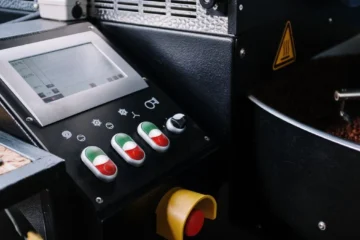
Consider this your morning briefing: You roasted two City+ batches on your SkyWalker 2—one Arabica, one Robusta. The results? The Robusta shot extracted in 10 seconds with a coarse grind, then 20 seconds with a finer setting. The Arabica? Perfect, at size 12. This isn’t a fluke. Robusta’s physical and chemical makeup demands a different approach.
Robusta beans are denser, harder, and more compact than Arabica. Their structure resists water flow, but only up to a point. When ground too coarsely, Robusta’s particles act like a sieve, letting water pass too quickly. That’s why your first shot was under-extracted. Switch to a finer grind, and the water lingers longer, extracting more flavor. But here’s the catch: Robusta’s density means even a medium grind can feel like a fine setting. This is why some baristas grind Robusta like Turkish coffee—finely enough to slow water but not so fine it mucks up the shot.
The science cuts deeper. Robusta has twice the caffeine of Arabica and a higher concentration of chlorogenic acids. These compounds contribute to its bold, bitter profile but also make it more forgiving in extraction. Arabica’s lighter body and higher acidity demand precision. Robusta’s robustness means it can handle a broader range of grind sizes, but you’ll still need to dial in the water temperature and pressure.
The takeaway? Robusta isn’t just a “stronger” bean—it’s a different beast. Grind it finer than Arabica, but not so fine it turns into a paste. Adjust your extraction time accordingly, and you’ll unlock its depth without sacrificing balance.
Share your setup in the comments.
What’s your go-to grind size for Robusta? Share your setup in the comments.
Questions & Answers
Which coffee has a higher caffeine content?
Robusta has about 2.7% caffeine, while Arabica has 1.2-1.5%. Robusta is naturally higher in caffeine content.
Which coffee is more commonly used in espresso?
Robusta is more commonly used in espresso due to its higher caffeine and crema production, though Arabica is often blended for flavor.
Information sourced from industry reports and news outlets.