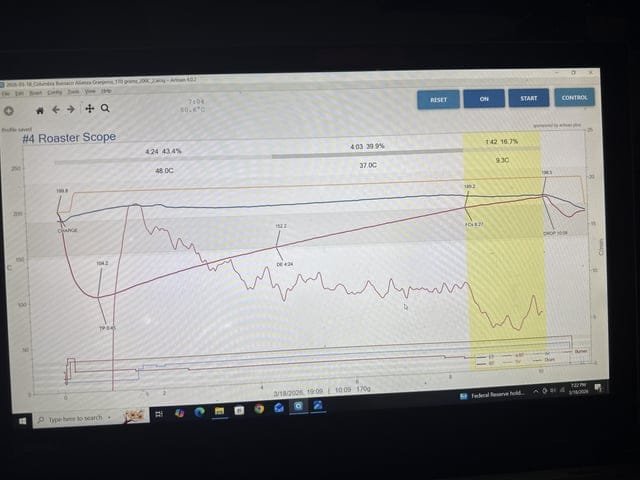
Here’s something to stir your curiosity: A light roast where you aimed for medium. The chaff crease is pale, the first crack hits at 1:42, and you dropped at 198°C—well short of your 212°C goal. Is this a sign you’re under-roasting, or just a minor misstep? The debate rages: some say the crash at first crack means you’re not carrying enough heat, while others dismiss it as irrelevant. The truth? It’s a symptom, not a verdict.
The key lies in understanding how heat distribution shapes roast profiles. A light roast’s telltale signs—pale chaff, a quick first crack, and a lack of body—are often the result of underdeveloped sugars. But don’t panic. This isn’t a failure; it’s a data point. If your goal temp was 212°C, you’re not failing to reach it—you’re failing to sustain it. The crash suggests your heat input dropped too soon, leaving the bean undercooked.
To fix this, consider two paths. First, adjust your drop point. If you’re hitting first crack at 1:42, delay the drop by 15–30 seconds. This gives the bean more time to absorb heat and develop a medium roast profile. Second, evaluate your heat management. Are you maintaining consistent temps before the drop? If your drum cools too quickly, you’ll always struggle to reach higher temps. Invest in a thermometer or a roast profile tracker to monitor this.
The real takeaway? Don’t let a single roast define your progress. Every crash and flick is a chance to refine your technique. The question is: What’s your next move?
Adjust your drop point or maintain higher temps to reach your target.
Key points: The crash at first crack isn’t a red flag, but it signals you’re under-roasting. Adjust your drop point or maintain higher temps to reach your target. Consistency in heat management is key to hitting medium roast profiles.
Close: Have you ever battled a similar crash and flick? What adjustments helped you land in the sweet spot?
Questions & Answers
Is a car crash and flick dangerous?
Yes, a crash and flick can indicate serious damage. Seek professional inspection to ensure safety before driving.
How common is a crash and flick?
Crash and flick are relatively rare but can occur due to mechanical failure. Regular maintenance reduces risk.
Information sourced from industry reports and news outlets.