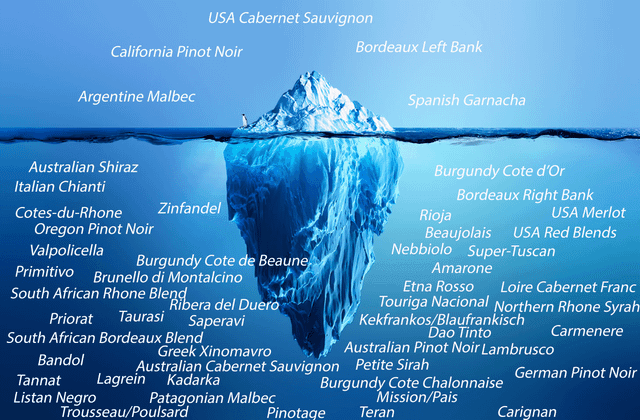
Get ready to sip on this: the red wine iceberg is here, and it’s not as simple as it looks. Last time, we broke down white wine into layers of accessibility and intrigue—now we’re diving into the darker, more complex world of reds. This isn’t just a gimmick; it’s a framework to cut through the noise of the US market, where mainstream labels dominate but hidden gems lurk beneath. The iceberg’s upper layers are your everyday bottles—Cabernet Sauvignon, Merlot, Pinot Noir—all widely available and easy to find. But the real story lies below, where wines like Nebbiolo, Syrah, and Tempranillo wait to be discovered. These aren’t just harder to find—they’re often more rewarding, with layers of flavor and structure that demand patience.
The US market’s obsession with “approachable” wines has created a blind spot. Think of the average wine shop: shelves overflow with bold, fruit-forward reds, but the deeper layers—wines that age, evolve, and challenge expectations—are underrepresented. This isn’t a criticism; it’s a reality. The iceberg’s middle tiers, like Malbec or Grenache, offer a balance of accessibility and depth, while the submerged layers—think Barolo, Amarone, or Rioja Reserva—require a willingness to step beyond the familiar. These wines aren’t just harder to find; they’re often priced higher, which can feel intimidating. But the payoff is real: they’re built for aging, complexity, and a conversation that lingers long after the last sip.
The real value of this iceberg isn’t in the wine itself but in the journey it represents. The US market’s vastness means there’s no one-size-fits-all approach. A bottle of Zinfandel in California might taste nothing like a Tempranillo from Spain, even if both are “red” and “accessible.” This is where the iceberg’s power lies: it forces you to ask, “What do I want from a red wine?” The answer could be bold, balanced, or even experimental. The key is to stop assuming the surface is the whole story.
Key points: The iceberg’s upper layers are your gateway to red wine, but the deeper tiers offer unmatched complexity. US market availability skews toward mainstream styles, making niche wines harder to find. Exploring beyond the surface isn’t about elitism—it’s about aligning your palate with what you truly crave.
What’s your go-to red wine that defies the iceberg’s surface.
What’s your go-to red wine that defies the iceberg’s surface? Share your favorite below.
Questions & Answers
Did the red wine iceberg taste bad?
The red wine iceberg had a strong, overpowering wine flavor that dominated the dish. The balance was off, making it less enjoyable than expected.
Can I salvage the red wine iceberg?
You can try adding more ingredients to balance the wine flavor. If it’s too bad, it’s best to discard and start over for better results.
Information sourced from industry reports and news outlets.