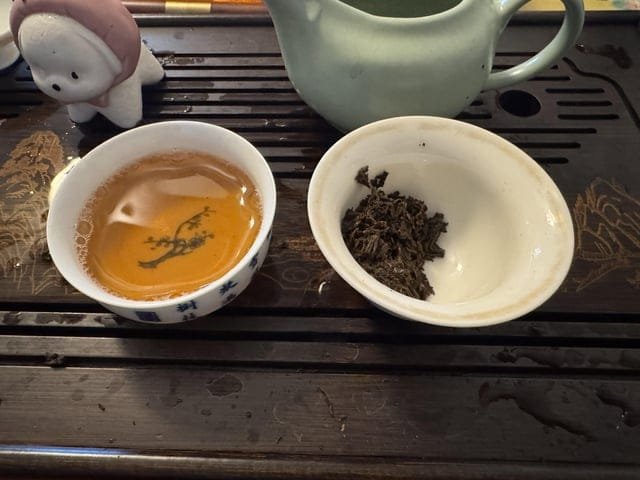
If you’re a puerh newbie chasing that elusive balance of floral brightness and earthy depth, you’re not alone. The journey from young sheng’s vibrant punch to aged sheng’s supposed complexity can feel like a leap into the unknown. Your recent experiments with 2007 Dayi 7542 and Xiaguan Jia Ji hint at a common struggle: aged sheng isn’t always a direct upgrade. It’s a different beast, shaped by time, storage, and the tea’s own evolution.
Aged sheng’s appeal lies in its transformation, not its replication of youth. Young sheng dazzles with sharp floral notes and a bold huigan—traits that fade as oxidation deepens. Aged versions often trade that initial fireworks for layered textures, like a slow-brewed broth rather than a bright citrus burst. But this shift isn’t a guarantee. Storage conditions—humidity, light, air—dictate whether the tea ages gracefully or stagnates. Your Guangzhou-stored samples may have missed the magic because the right conditions are as critical as the tea itself.
Flavor profiles in aged sheng can be elusive, even for seasoned palates. You’re not failing to notice nuances; you’re encountering a tea that rewards patience and context. Aged sheng isn’t about hitting familiar notes—it’s about unlocking new dimensions. Think of it as a conversation between the tea and the drinker, where the dialogue unfolds over time. If your current samples feel flat, it might not be the tea’s fault. It could simply need more time to reveal its story.
Key points: Aged sheng isn’t a carbon copy of young sheng—it’s a different expression. Storage conditions drastically influence its character. Patience and context are essential to appreciating its complexity.
Have you found aged sheng’s hidden charms, or does it still feel like a gamble.
What’s your take? Have you found aged sheng’s hidden charms, or does it still feel like a gamble? Share your experience below.
Questions & Answers
How long should I age sheng puer?
Aged sheng puer improves with time, but quality peaks after 10–20 years. Longer aging can enhance complexity, but results vary by tea and storage conditions.
Is aged sheng better than raw?
Aged sheng can be smoother and more complex than raw, but it depends on aging quality and personal taste. Both have unique strengths and appeal.
Information sourced from industry reports and news outlets.