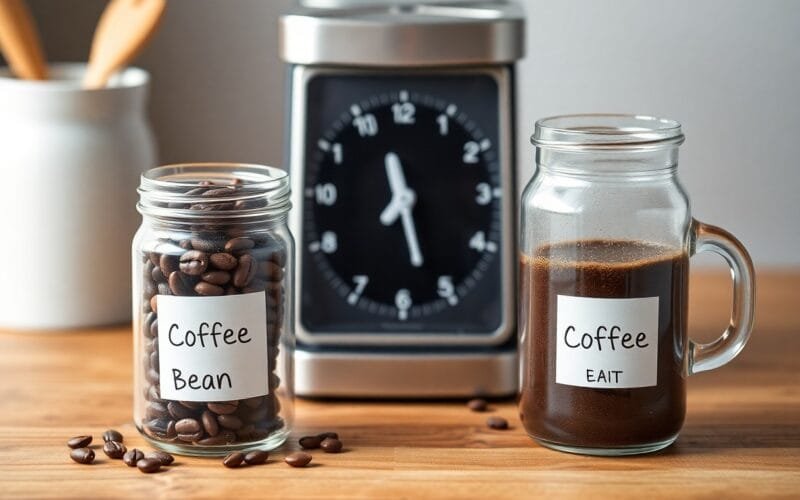
Measuring coffee accurately can significantly impact your brewing experience. You might wonder if coffee beans and ground coffee measure the same, and the answer often surprises many. When you grind coffee, the volume changes, hence leading to variations in your brewing ratio. To optimize your coffee making, consider exploring Why You Should Measure Coffee By Weight Instead Of ….
Understanding Coffee Measurements
Your brewing precision heavily relies on proper coffee measurements, significantly influencing taste and strength. The standard measurement you might consider is often referred to as the The “Golden Ratio” for Brewing Coffee, suggesting a specific coffee-to-water ratio that works best for your preferred brew. Understanding these measurements can lead to a more consistent and enjoyable cup each time.
The Weight of Coffee Beans
The Weight of Ground Coffee
Once you grind coffee beans, the weight can change depending on grind size. Finer grinds can take up more volume compared to coarser grinds, affecting how you measure. Typically, a cup of ground coffee will still reflect a similar weight to the beans but adjust according to the grind’s texture to maintain proper ratios. For the best brewing experience, aim for around 10 to 12 grams of ground coffee per cup.
The weight of ground coffee can be deceptive if you’re using volume measurements. As the grind size becomes finer, the resulting density increases, which can lead you to mistakenly over- or under-measure. For instance, one tablespoon of finely ground coffee weighs more than a tablespoon of coarsely ground coffee. Using a scale ensures you maintain the appropriate brewing ratios, enhancing flavor extraction while minimizing brew inconsistencies. Aim for precision to unlock the full potential of your coffee.
Differences Between Whole Beans and Ground Coffee
The differences between whole beans and ground coffee extend beyond mere appearance. Whole beans maintain their freshness and flavor longer due to their intact structure, while ground coffee undergoes a faster degradation process. If you’re curious about whether does a tablespoon of coffee beans equal a tablespoon of ground coffee, the answer lies in their varying densities and volume. Whole beans occupy more space, meaning that measurements can vary significantly depending on their form.
Volume and Density
When measuring coffee, volume and density play a vital role. Whole coffee beans are less dense than ground coffee, leading to volume discrepancies. A tablespoon of whole beans will yield a different weight when compared to a tablespoon of grounds. This difference can affect your brew’s strength and flavor profile, so accurate measurements matter.
Brewing Impact
Your brewing experience can be dramatically influenced by whether you use whole beans or ground coffee. While whole beans offer prolonged freshness, ground coffee provides convenience. When brewing, ground coffee typically releases flavors more rapidly due to its increased surface area. This can lead to stronger coffee if measured incorrectly, potentially resulting in over-extraction. Balancing the grind size with brewing time is necessary to achieve the desired flavor profile.
Conversion Between Whole Beans and Ground Coffee
To convert whole coffee beans to ground coffee, the general rule is that one ounce of whole beans produces about 0.9 ounces of ground coffee. This reduction accounts for the air and space occupied in the grind. Therefore, if you’re aiming for a specific weight of ground coffee, it’s necessary to measure your beans accordingly, typically using a scale for precision.
General Guidelines
When switching between whole beans and ground coffee, consider that a standard ratio is about 1:15, meaning one part coffee to 15 parts water. This ratio varies based on personal taste and brewing method, so adjust quantities to achieve your desired strength.
Tools for Accurate Measurement
Using a digital scale is the most effective way to measure coffee accurately, allowing you to weigh both beans and ground coffee consistently. A burr grinder with adjustable settings can also enhance grind uniformity, vital for optimal extraction and flavor.
Digital scales provide precision that typically exceeds measuring cups, ensuring you replicate your brewing ratios each time. Many scales also have a tare function, letting you zero out the weight of containers. A high-quality burr grinder enhances your grind consistency, which is critical as uneven grinds can lead to over-extraction or under-extraction, affecting flavor. Using these tools can significantly elevate your coffee brewing routine.
Practical Implications
The way you measure coffee beans versus ground coffee has practical consequences for flavor and brewing consistency. When transitioning from whole beans to ground coffee, the grind size affects extraction rates. A finer grind increases surface area, which can lead to over-extraction if not monitored. Conversely, using measurements meant for whole beans can result in underwhelming flavor profiles if improperly converted for ground coffee. Proper understanding ensures you achieve a balanced and flavorful cup every time.
Home Brewing
In home brewing, precise measurements matter. If you usually weigh your coffee beans, converting to ground coffee might require adjustments in weight. Generally, 1 ounce of whole beans translates to about 2 tablespoons of ground coffee. To maintain flavor consistency, consider using a coffee scale for accuracy.
Professional Settings
In professional settings, the contrast between whole beans and ground coffee can significantly impact customer satisfaction. Baristas often adhere to strict recipes and measurements, with ground coffee needing careful attention to weight and grind size to ensure consistency across servings.
For instance, a typical espresso shot uses 18-20 grams of ground coffee, while the corresponding whole bean measurement would be approximately 15-18 grams, depending on the grind size. Professionals utilize scales and grinders with precise settings to maintain the integrity of each batch and address variations in beans. Quality control is paramount; even minor discrepancies can result in substantial flavor differences, affecting the overall experience for customers. The goal is a consistently excellent product, making attention to detail necessary in every aspect of preparation.
Common Misconceptions
Many consumers confuse coffee measurements, assuming that a cup of whole beans is equivalent to a cup of ground coffee. However, grinding changes the density of coffee, leading to discrepancies. This misconception can result in less than optimal brewing, affecting both flavor and strength. Understanding the differences between whole beans and ground coffee is important for achieving that perfect brew.
Weight vs. Volume
You might think that by using the same volume measurement, you’re getting the same amount of coffee. However, whole beans and ground coffee have different weights per volume due to their physical structure. One cup of whole beans typically weighs around 85 grams, while a cup of ground coffee can weigh up to 100 grams or more, depending on grind size. This weight variance can significantly alter the coffee’s strength in your cup.
Freshness and Flavor
Freshness greatly impacts the flavor of your coffee. Whole beans retain their flavor for longer periods compared to pre-ground coffee. Once ground, coffee starts to oxidize rapidly, losing its aromatic compounds and nuances. Ideally, you should grind your beans just before brewing to capture the freshest flavors possible, enhancing your overall coffee experience.
The flavor degradation of ground coffee occurs as it interacts with air, light, and moisture. For example, ground coffee loses its optimal flavor within a week or two after grinding, depending on storage conditions. Whole beans, when stored properly in a cool, dark place, can maintain their freshness for several weeks or even months. Choosing to grind your coffee just before brewing can elevate your routine, delivering a richer, more vibrant cup that truly showcases the coffee’s profile. Investing in a quality grinder can also ensure a consistent grind size, further enhancing your brew.
Final Words
Now you have a clearer understanding that coffee beans and ground coffee do not measure the same. It’s important to consider the grind size and density when determining your coffee measurements. For accurate brewing, adjust your scales accordingly based on whether you are using whole beans or ground coffee. This knowledge empowers you to achieve the flavor profile you desire in every cup.
FAQ
Q: Do coffee beans and ground coffee measure the same in weight?
A: No, coffee beans and ground coffee do not measure the same in weight. Whole coffee beans are denser than ground coffee, leading to differences in weight when measuring by volume. For accuracy in brewing, it’s best to measure by weight rather than volume.
Q: How does the grind size affect the measurement of coffee?
A: Grind size significantly impacts how coffee is measured. Finer grounds occupy less volume than coarser grounds, meaning a cup of finely ground coffee will weigh more than a cup of coarsely ground coffee. For consistent brewing results, it’s advisable to use a scale.
Q: What is the best way to measure coffee for brewing?
A: The best way to measure coffee for brewing is to use weight. A general guideline is to use 1 to 2 grams of coffee per 1 ounce of water, depending on personal taste preferences. Weighing coffee ensures consistent flavor and strength in each brew.