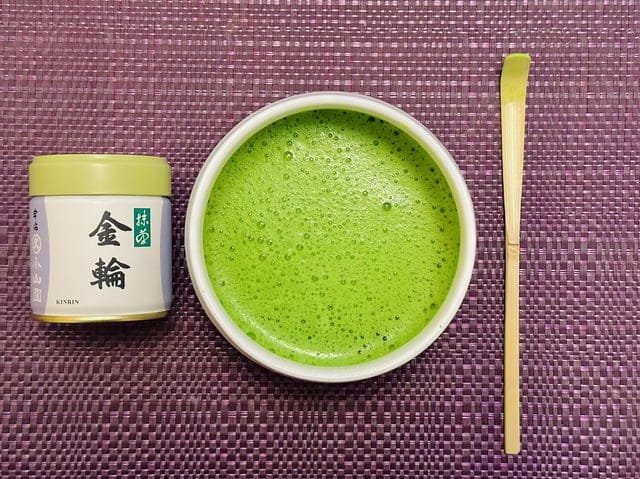
Real talk: If you’ve ever wondered what makes a matcha truly exceptional, Marukyu Koayamaen’s Kinrin might be your revelation. This isn’t just another green powder—it’s a masterclass in balance, delivering a flavor profile that’s both refined and approachable. Prepared as usucha, the Kinrin reveals layers of fresh grassiness and a subtle sweetness that lingers without overpowering. The key? A precise ritual: 2.3 grams of powder, 80ml of water heated to 80°C, and a swift whisk to coax out a velvety foam. The result is a cup that feels like a quiet conversation with the earth, not a loud declaration of flavor.
What sets Kinrin apart is its absence of bitterness—a rarity in matcha. Most powders lean into earthy or astringent notes, but Kinrin’s brightness feels like a spring morning. The vegetal character is clean, almost floral, with a hint of umami that ties the flavors together. It’s the kind of matcha that invites you to sip slowly, savoring each nuance. For those who’ve grown tired of the standard matcha experience, this is a wake-up call. It’s not just about taste—it’s about precision in cultivation and processing.
Marukyu Koayamaen isn’t just making matcha; they’re curating an experience. The Kinrin is part of a broader lineup that includes Eiju and Shoka no Mukashi, each with its own personality. While Kinrin leans into freshness, Eiju might offer a deeper, more complex profile, and Shoka no Mukashi could surprise with its boldness. The brand’s commitment to quality is evident in every detail, from the sourcing of leaves to the final whisking. It’s a testament to how tradition can evolve without losing its essence.
So, what’s your go-to matcha for a perfect usucha? Share your favorites and let’s keep the conversation brewing.
Questions & Answers
How do you prepare Marukyu Koayamaen’s Kinrin matcha?
Use 2.3g of powder, 80ml water at 80°C. Whisk swiftly to create a velvety foam. The result is a smooth, balanced cup with fresh grassiness and subtle sweetness.
Why is Kinrin matcha less bitter than others?
Kinrin’s brightness and subtle sweetness balance its flavor, avoiding bitterness. This makes it feel like a spring morning, not an earthy or astringent experience.
Information sourced from industry reports and news outlets.