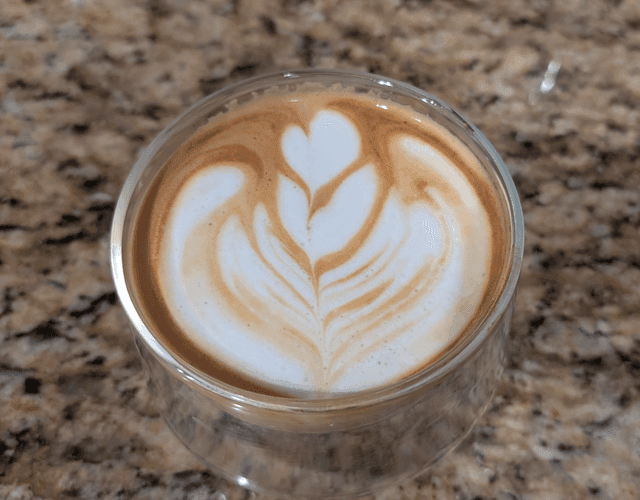
Here’s something to stir your curiosity: the cortado’s magic lies in the balance between milk and espresso, but achieving that harmony feels like chasing a ghost—until you nail the routine. For those of us who prefer less milk, the Silvia’s precision can feel like a double-edged sword. It’s a machine that demands respect, and when you finally sync with its rhythm, the results? A cortado that’s creamy, crisp, and utterly satisfying.
The Silvia’s strength is its pressure, but that same force can turn a simple froth into a mess if you’re not careful. The key? Temperature. Milk that’s too cold won’t steam properly, while milk that’s too hot risks scalding and a watery texture. Aim for 60°C—warm, not hot—and let the machine do the heavy lifting. But don’t forget the human touch. Pouring at a 45-degree angle, not straight down, creates microfoam that’s silky, not chunky. It’s a dance between machine and milk, and the Silvia’s quirks require a tailored approach.
Consistency isn’t about perfection—it’s about repetition. The user’s success came from refining their routine: a few seconds of pre-steam, a precise pour, and a pause to let the foam settle. It’s the difference between a cortado that feels like a compromise and one that feels like a triumph. The Silvia’s pressure can be a beast, but with the right mindset, it becomes an ally.
The crisper art? It’s not just about texture—it’s about control. A cortado’s foam should be a mirror, not a storm. That means adjusting the milk’s temperature, mastering the pour, and trusting the machine’s quirks. For those who’ve struggled with the Silvia, this isn’t just a win—it’s a revelation.
Consistency comes from refining your routine, not chasing perfection.
Key points: The Silvia’s pressure demands precise milk temperature (60°C) and a 45-degree pour to achieve silky microfoam. Consistency comes from refining your routine, not chasing perfection. The crisper art of a cortado is about control, not force.
What’s your secret to nailing the cortado? Share your go-to technique in the comments—let’s keep the conversation brewing.
Questions & Answers
How do I fix foam issues in my coffee?
Use a quality frother, clean equipment, and adjust temperature. Avoid overfilling. Check for worn parts. Consistent technique improves results.
What causes coffee to be too foamy?
Over-frothing, cold milk, or old equipment. Too much air trapped. Check frother settings. Clean parts regularly for better results.
Information sourced from industry reports and news outlets.